

Kathleen “Kay” McNulty (married first to Mauchly and later Antonelli) was a programmer and computer scientist. Kathleen was born in Ireland, and her family immigrated to Philadelphia when she was three years old. She grew up in America, where she discovered and developed her mathematical abilities and talents. Learn more at philadelphia-future.
Kathleen was one of the first six ENIAC programmers, whose achievements and contributions to the advancement of computer technology became well-known in the twenty-first century. We will tell you more about her fate, career and personal life.
Passion for mathematics and career as a programmer
Kathleen McNulty was born in Ireland on February 12, 1921. She was the third of six children in the family of James McNulty and Anne Nelis. Her father was a political figure who also taught Irish Republican Army soldiers. Because of his activities, he was obliged to emigrate to the United States with his family in the fall of 1924.
The McNulty family arrived in Philadelphia and settled in the Chestnut Hill neighborhood. James worked as a bricklayer, and his children had the opportunity to learn and grow up in peace.
First, Kathleen attended a local parochial school. She then enrolled in a Catholic high school for girls, where she developed an interest in algebra and geometry. The girl excelled in these sciences and eventually enrolled in a local college. Throughout college, Kathleen concentrated her studies on mathematics and statistics. In June 1942, she graduated from the educational institution with a mathematics degree.
Soon, the potential graduate came across an advertisement recruiting girls with a degree in mathematics for the federal service to calculate bullet and shell trajectories. The fact is that the Second World War was already underway, and the United States was conducting extensive military research and development.
The job that interested Kathleen was offered by a research facility located at the Aberdeen Proving Ground (Maryland). Kathleen also offered this position to her fellow students. Frances Bilas agreed to come. Within a week, the girls were already working as “computers” with annual salaries of $1,620 dollars.
A few months later, they began working on the differential analyzer, which was located in the basement of the Moore School of Electrical Engineering. It was the largest and most complex analog mechanical calculator at the time. There were only several similar machines around the world.
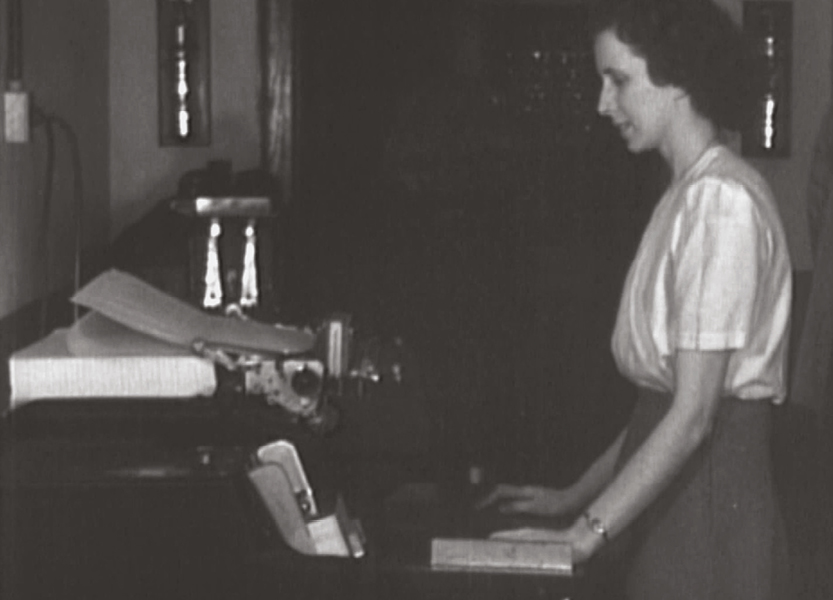
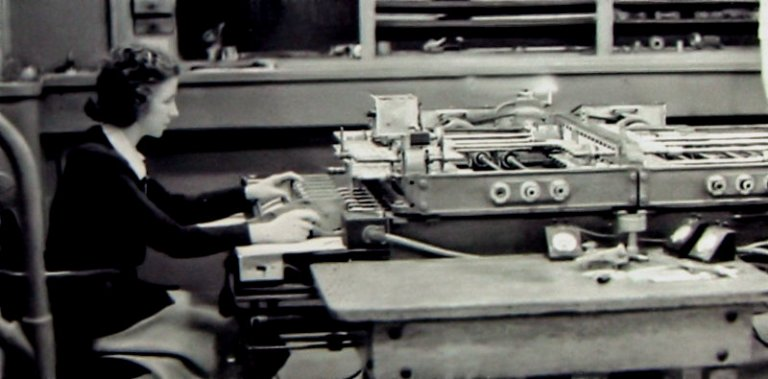
In June 1945, Kathleen McNulty began her work with the ENIAC, the first general-purpose electronic digital computer. She and five other girls were the first programmers to learn how to reprogram a machine to solve various problems. Thus, Kathleen was the one who invented the subroutine. However, nothing was known about her achievements or the efforts of her coworkers until the twenty-first century. Instead, there was common knowledge about men who also worked with ENIAC.
In 1948, Kathleen married and left the project. Later, she worked on BINAC and UNIVAC I computers designed by her husband, John Mauchly.
The scientist led a long and exciting life and died of cancer in Pennsylvania at the age of 85. This occurred on April 20, 2006.
Personal life
Kathleen first got married in 1948. The man she chose was the inventor of the ENIAC and co-founder of the Eckert-Mauchly Computer Corporation, John Mauchly. The man had two children from his previous marriage (his first wife died tragically in 1946).
Following the wedding, John, Kathleen and the children settled near the University of Pennsylvania. There were three children born in the marriage. The family eventually relocated to a large farmhouse near Ambler, Pennsylvania. John passed away in 1980.
Kathleen remarried in 1985. This time her husband was photographer Antonelli, hence Kathleen is most commonly referred to by this surname in historical sources. In 1994, the man was diagnosed with Parkinson’s disease. A year later, he died.
Interesting facts and recognition
Kathleen excelled at mathematics throughout her high school years. In 1942, she was one of just three female students to acquire a college degree in the subject. The course included a total of 92 female students.
Despite the long silence surrounding the contribution of female researchers in the development of ENIAC, a documentary was released in 2010 that reveals their involvement. Thus, each programmer was honored. As for Kathleen:
- in 1997, she was inducted into the Women In Technology International Hall of Fame
- in 2002, was inducted into the National Inventors Hall of Fame (USA)
- in 2017, Dublin City University named a computer building in her honor
- in 2019, by a public vote, the supercomputer of the Irish Centre for High-End Computing at the National University of Ireland in Galway was named “Kay” in honor of the researcher.
In addition, the Letterkenny Institute of Technology awards the best computer science student with the Kay McNulty medal and award every year.