
Center City Philadelphia, once subject to the unwritten “Penn’s Law,” today proudly displays its new vertical dominant. Comcast Technology Center is not just another skyscraper. It is an architectural and engineering manifesto that has become the tallest building in all of Pennsylvania and a symbol of the city’s technological progress.
This structure, opened in 2018, stands in striking contrast to the stone majesty of the old City Hall, embodying a new era of innovation. How did engineers manage to erect this giant glass tower, whose uniqueness lies not only in its height but also in its complex combination of office, media, and hotel spaces? This is the story of how one building transformed the city’s skyline, becoming a powerful leader in environmental solutions and intelligent construction. Details on philadelphia-future.
Vertical Triumph
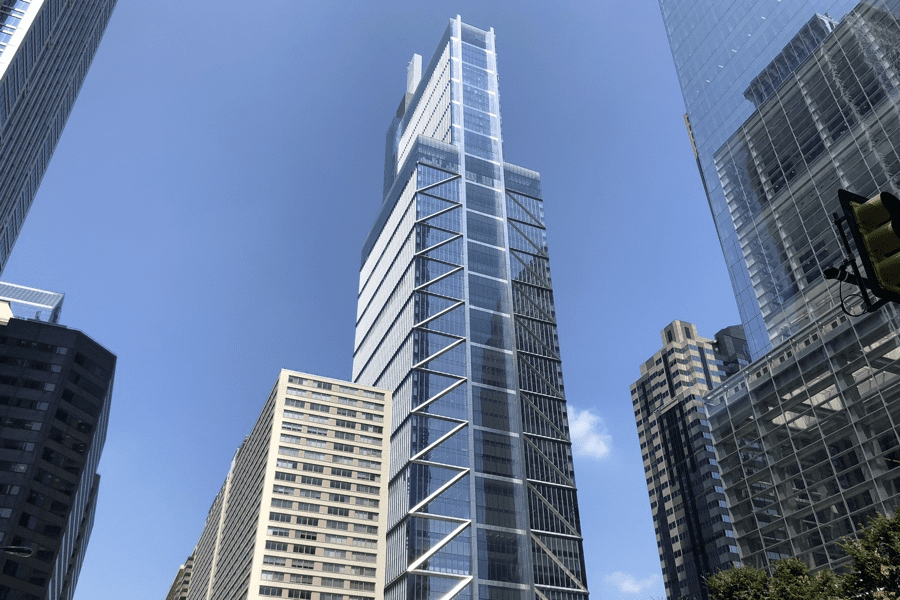
Comcast Technology Center towers over the city at 342 meters (ca. 1,122 ft), officially securing the title of the tallest building not only in Philadelphia but in all of Pennsylvania. This achievement is a true triumph of modern engineering and architectural design.
The design for this ambitious tower was developed by the world-renowned British architect Norman Foster and his firm Foster + Partners. Their vision was to create not just office space, but a technological icon that would reflect Comcast’s innovative character.
The structural features of the tower demonstrate a cutting-edge approach to high-rise construction.
- Vertical Campus. The building is an integrated, multifunctional space. It is a monolithic high-rise where Comcast offices, innovative media centers, and an elite hotel occupy distinct but interconnected zones. Such hybrid functionality is a key feature of modern vertical design.
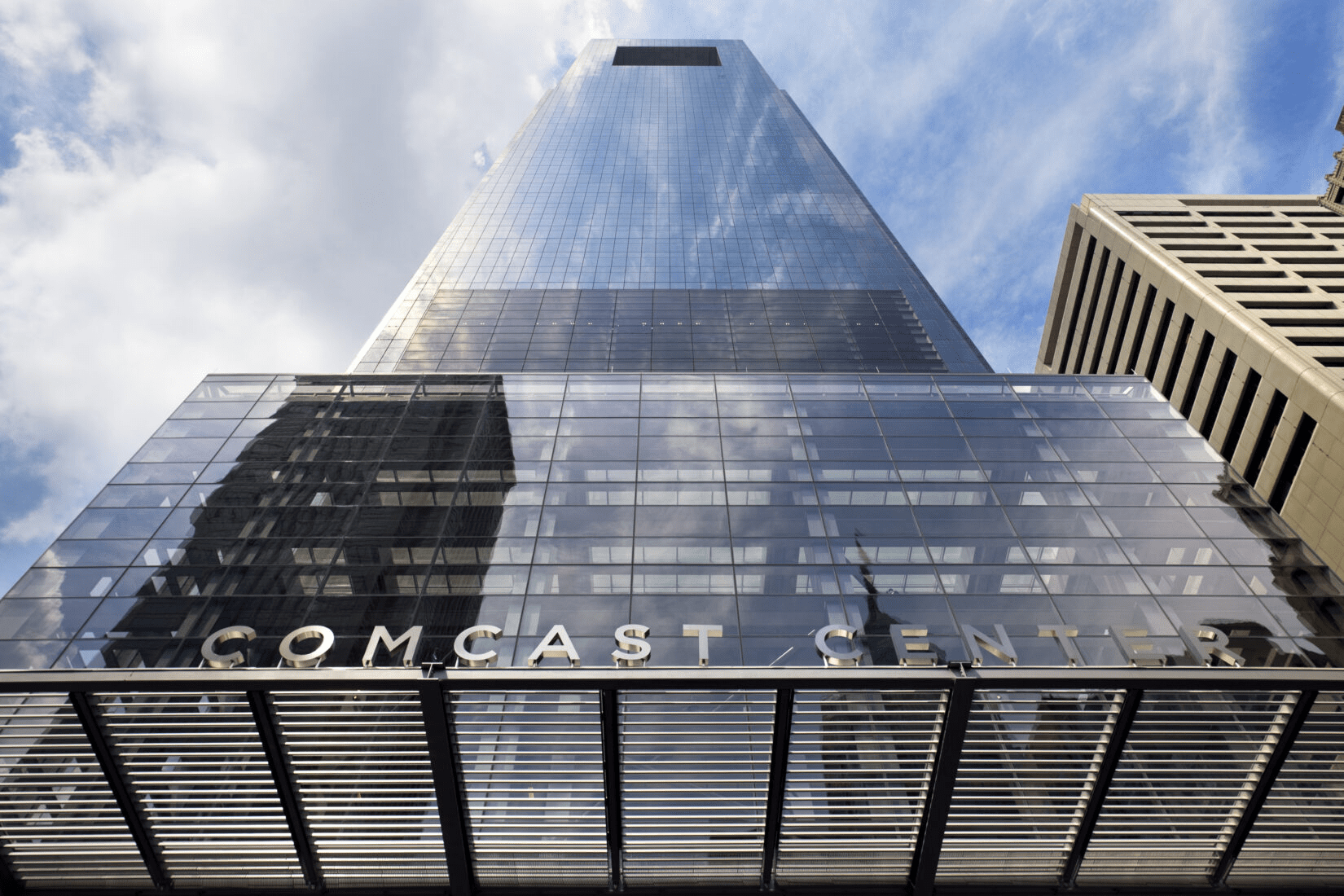
- Glass Façade and Energy Efficiency. High-tech glass cladding distinguishes the exterior. The use of double-glazed windows and special coatings ensures maximum natural light while guaranteeing high energy efficiency and minimizing heat loss.
- Extreme Stability. To ensure structural integrity and safety at such an extreme height, engineers used high-strength concrete and complex systems for damping oscillations from strong winds. This was a necessary compromise to overcome natural forces.
With 60 stories covering a total area of over 1.56 million square feet, this structure is a true giant in volume. It reflects Philadelphia’s transition from the era of stone masonry to the era of high-tech glass engineering.
Work, Media, and Hospitality
The uniqueness of the Comcast Technology Center lies precisely in its multifunctionality. It is not a typical office monolith housing only desks and computers, but a true technology hub that unites several completely different, yet complementary, areas of activity under one glass roof.
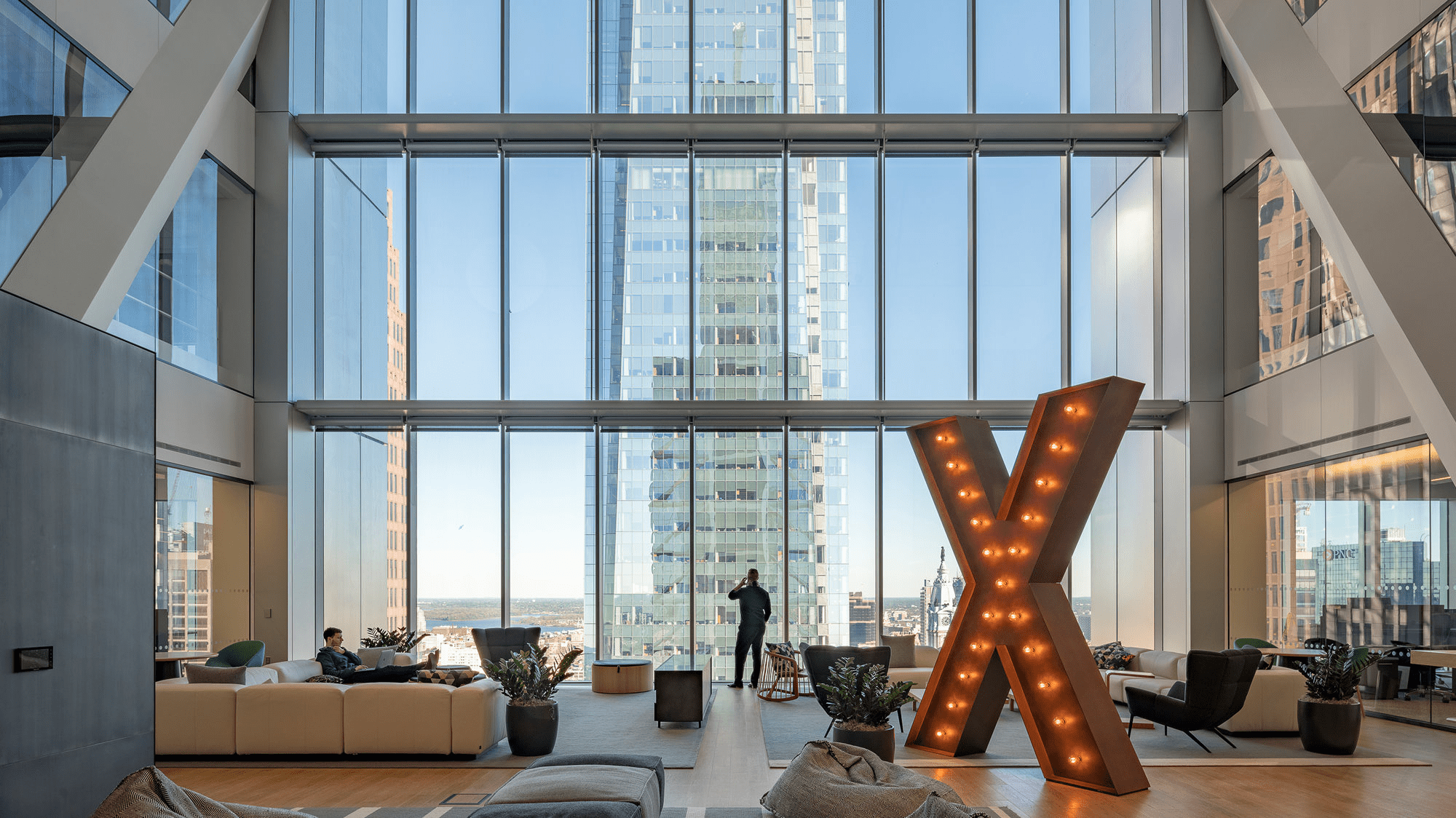
The upper part of the tower (from the 48th to the 60th floors) is dedicated to the five-star Four Seasons Hotel Philadelphia. This adds not only an element of luxury and hospitality but also engineering complexity to the structure. The hotel offers its guests incredible panoramic views of the entire city landscape and the Delaware River, emphasizing the structure’s status as a city observation deck. This placement of an elite hotel required special attention from the designers to wind protection and oscillation stabilization on the upper levels.
The middle floors of the tower house the laboratories and studios of the parent company, Comcast. Specifically, the regional media center NBC Sports Philadelphia is located here. The presence of such a complex and television studios, where content is produced, required a specialized engineering approach to soundproofing, acoustics, and equipment. Builders had to integrate complex cable systems, specialized power supplies, and an efficient cooling system, necessary for professional equipment operation, into a single high-rise frame.
The lower floors and the building’s lobby are dedicated to public space, retail, and restaurants, serving both employees and visitors. The Comcast Technology Center has become a true microcosm, combining high-tech business activity, creativity in the media sector, and an elegant service industry. This makes it a dynamic center that operates 24 hours a day.
Ecology and Comfort
Norman Foster’s architectural approach always emphasizes ecology and user comfort, and the Comcast Technology Center is no exception. The building adheres to high-energy efficiency standards:
- High-Performance Glass. The façades have a low-heat transfer coefficient, minimizing heat loss in winter and overheating in summer.
- Daylight Penetration. The design ensures deep penetration of natural light into workspaces, reducing the need for artificial lighting.
- Heat Recovery System. Modern ventilation and heating systems are implemented that reuse exhaust heat, significantly reducing energy consumption.
These innovations allowed the tower to achieve Leadership in Energy and Environmental Design (LEED) certification, confirming its status as an exemplary green skyscraper.
Overcoming the “Curse of Penn”
The construction of the Comcast Technology Center was not just an architectural achievement but also a symbolic, final point in Philadelphia’s historical architectural and cultural conflict, known as the “Curse of Penn.” This powerful mythological legacy claimed that none of the city’s major sports teams could win a championship until the city’s tallest building exceeded the height of the William Penn statue on City Hall.
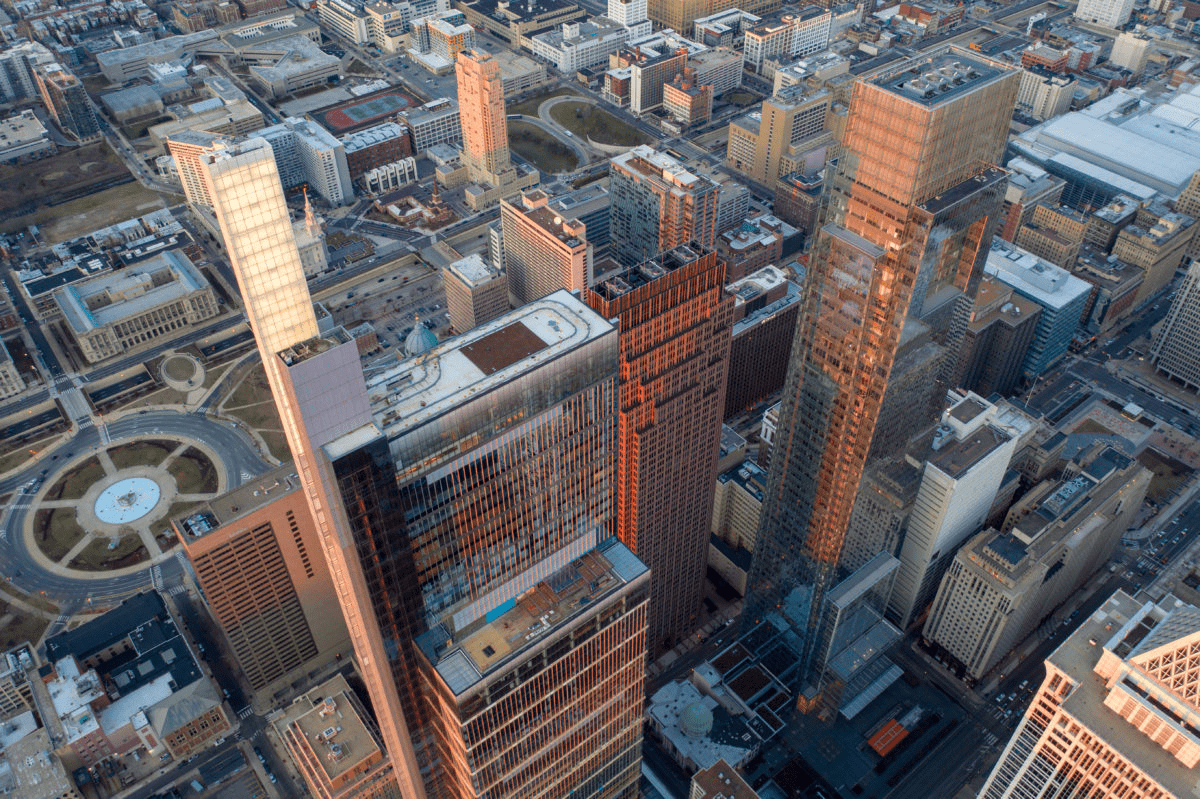
Although the actual violation of the taboo occurred earlier in 1987 with the completion of One Liberty Place, the construction of the Comcast Technology Center, which soared significantly higher than all its predecessors, became the definitive architectural act. This act symbolized the complete modernization and irreversible liberation of the city landscape from the old, age-old restrictions that constrained vertical development.
The building, in essence, declared, Philadelphia is no longer afraid of heights or old legends. The tower is not just taller; it is technologically dominant, which is the key point.
The Comcast Technology Center is the clearest and most convincing proof of how technological progress and bold, innovative design not only successfully overcame engineering barriers (erecting such height without losing stability) but also finally dispelled the cultural barriers of folklore. Today, the tower stands as a monument to a new era where innovation dominates, and the “curse” remains only an interesting anecdote from the past.
Key Data on Comcast Technology Center
| Characteristic | Parameter / Detail | Significance and Context |
| Year Opened | 2018 | Tallest building in the state of Pennsylvania. |
| Height | 342 meters (ca. 1,122 ft) | Record for high-rise construction in Philadelphia. |
| Architect | Norman Foster (Foster + Partners) | World-renowned architect, known for ecological projects. |
| Key Functions | Comcast Offices, Media Studios, Four Seasons Hotel. | Multifunctional vertical campus. |
| Environmental Status | LEED Certification | High-performance glass and heat recovery. |
| Cultural Significance | Final overcoming of the “Curse of Penn” | Symbol of the city’s technological and architectural modernization. |

