

The history of the women who were pioneers in programming became widely known after a 2010 documentary brought their story to the screen. These women, who worked in Philadelphia during World War II, made a significant contribution to programming, but the credit initially went to their male colleagues. Today, we know more about their groundbreaking work, and we want to introduce you to one of the first six programmers in history: Marlyn Meltzer, née Wescoff. You can learn more at philadelphia-future.
From Weather Calculations to ENIAC
Marlyn Wescoff was born in Philadelphia in 1922. While little is known about her early childhood, we do know that she graduated from Temple University in 1942. That same year, she began working at the University of Pennsylvania’s Moore School of Engineering, where she performed weather calculations and learned to operate the related equipment.
Marlyn’s talent for the work quickly became apparent, and within a year, she was transferred to a different department to calculate ballistic trajectories. This was a critical role during World War II, as the U.S. government was investing heavily in military innovations, including those related to computation.
The U.S. Army funded the Moore School’s work and hired around 80 women to manually calculate ballistic trajectories using complex differential equations. They were literally called “computers”—a testament to their mathematical skills and the excellence of their work.
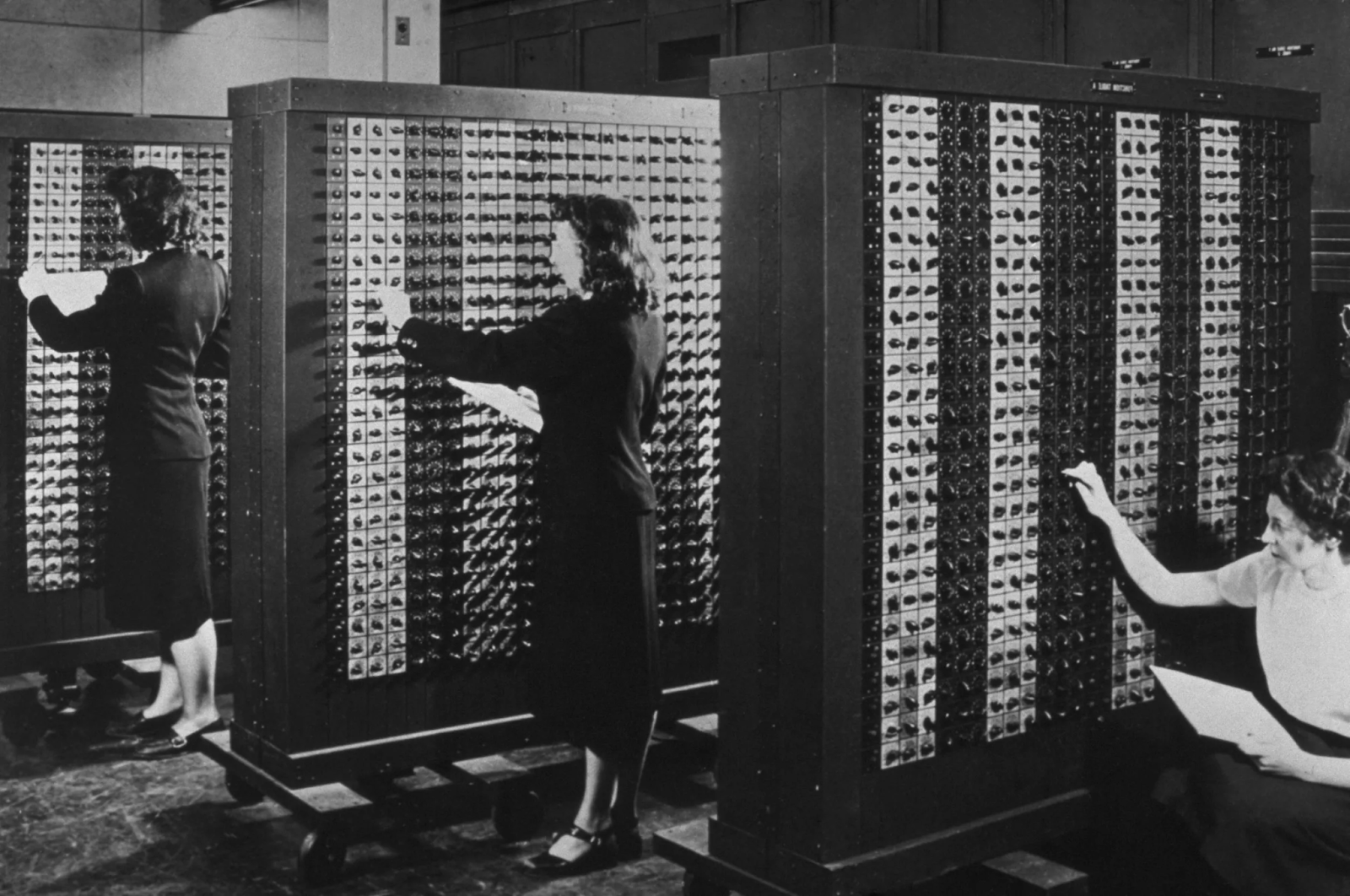
In 1945, a new experimental project was initiated with Army funding: the creation of the world’s first fully electronic digital computer. Six of the female “computers” were chosen to be its first programmers, including Marlyn. Her team also included fellow Philadelphians Kathleen Antonelli and Frances Bilas.
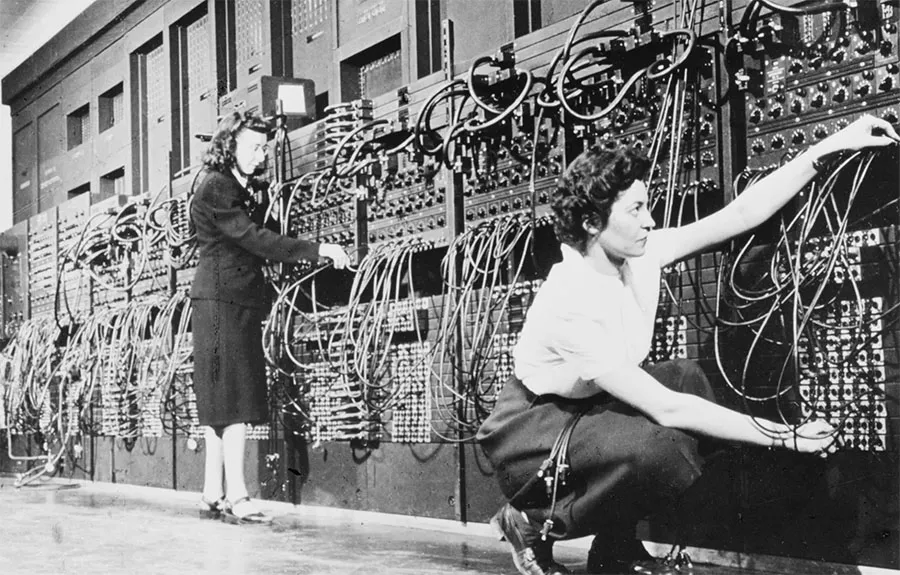
The new machine was named ENIAC, and it was the world’s first general-purpose electronic digital computer. Crucially, it could be reprogrammed to solve various tasks, which Marlyn and her colleagues spent their time experimenting with. The machine itself was a technological marvel:
- It weighed about 30 tons and occupied 1,800 square feet (167 sq m).
- It contained 17,468 vacuum tubes, 1,500 relays, 7,200 silicon diodes, 70,000 resistors, 10,000 capacitors, and approximately 5,000,000 manually soldered connections.
- The computer required more than 150 kilowatts of electrical power to run.
Philadelphia residents at the time believed that the frequent power outages in the city were caused by the scientists turning on this powerful machine.
As part of the project, Marlyn continued calculating ballistic missile trajectories, now working to automate the process using the computer. ENIAC was officially unveiled to the public in 1946. While the male engineers who developed the machine gained global fame, the first programmers who brought it to life were not publicly acknowledged.
Most of the women eventually left the project for various personal reasons, and their story only became widely known a half-century later. It was then that the world finally recognized their groundbreaking contribution to computer science and programming.
Personal Life and Volunteer Work
Marlyn Wescoff left the group of programmers in 1947 when she married Dr. Philip Meltzer. She had two children, a son named Hugh and a daughter named Joy, and enjoyed a happy family life. While she never returned to programming or advanced mathematics, she did volunteer work at a library, a Sunday school, and for a food delivery service.
In her later years, Marlyn worked with the Susan G. Komen for the Cure organization. She knitted more than 500 hats for women who had lost their hair due to chemotherapy treatments. She was dedicated to volunteerism and always found a way to make the world a little better.
Marlyn passed away on December 7, 2008, in Pennsylvania, where she and her husband had moved in 1957. At the time of her death, she was 86 years old and had three grandchildren.
Recognition and Legacy
The legacy of Marlyn Meltzer and her fellow pioneering programmers has been honored in:
- A 1996 book that tells the story of all the women who worked on the world’s first powerful computer.
- The 2010 documentary “Top Secret Rosies: The Female Computers of WWII.”
- The induction of all six women into the Women in Technology International Hall of Fame in 1997.
This is the story of Marlyn Wescoff, later Meltzer—the American programmer who was one of ENIAC’s first six programmers. The world’s first electronic digital computer launched the age of computing and made the development of programming possible. The foundations were laid during World War II in Philadelphia, and all those involved in these developments, both men and women, deserve to be remembered and honored.