

More than 30 million passengers pass through the terminals of Philadelphia International Airport every year, arriving and departing in all possible directions. These gates to the sky service numerous flights: between Europe and Latin America, the Middle East and the far islands, Canada and the United States and many more. We will tell you more about the airport’s construction and development. Learn more at philadelphia-future.
The sky over Philadelphia
The first time man entered the airspace of the United States was over Philadelphia in 1793. Frenchman Jean-Pierre Blanchard demonstrated the capabilities of a hot air balloon to the Americans, sowing the seeds of a genuine interest in the possibility of flying. Aviation continued to advance, and Philadelphia became the heart of modern air transport in 1925.
Then the city received 125 acres of land to train aviators of the Pennsylvania National Guard. The following year, the location was designated as a municipal aviation landing area under an agreement between the city government and Eastern Airlines’ forerunner, the Ludington Exhibition Company.
One of the key figures of that period was the pilot Charles Lindbergh. He decided to make a solo flight to Paris from New York after touring several cities in the United States. His list of destinations included Philadelphia as well, where his plane landed on October 22, 1927. On this historic day, in addition to making a successful landing, Lindbergh raised the American flag over the Philadelphia Municipal Airport, as he later named it.
At the time, the airport did not have a terminal. In 1930, the city purchased a large abandoned area nearby in order to expand and build a proper airport. The project was postponed due to the Great Depression. Yet, in 1937, construction began, and on June 20, 1940, the airport was officially opened. Airlines such as American Airlines, Eastern Air Lines, Trans World Airlines and United Airlines have all begun to operate flights here.
World War II and post-war development
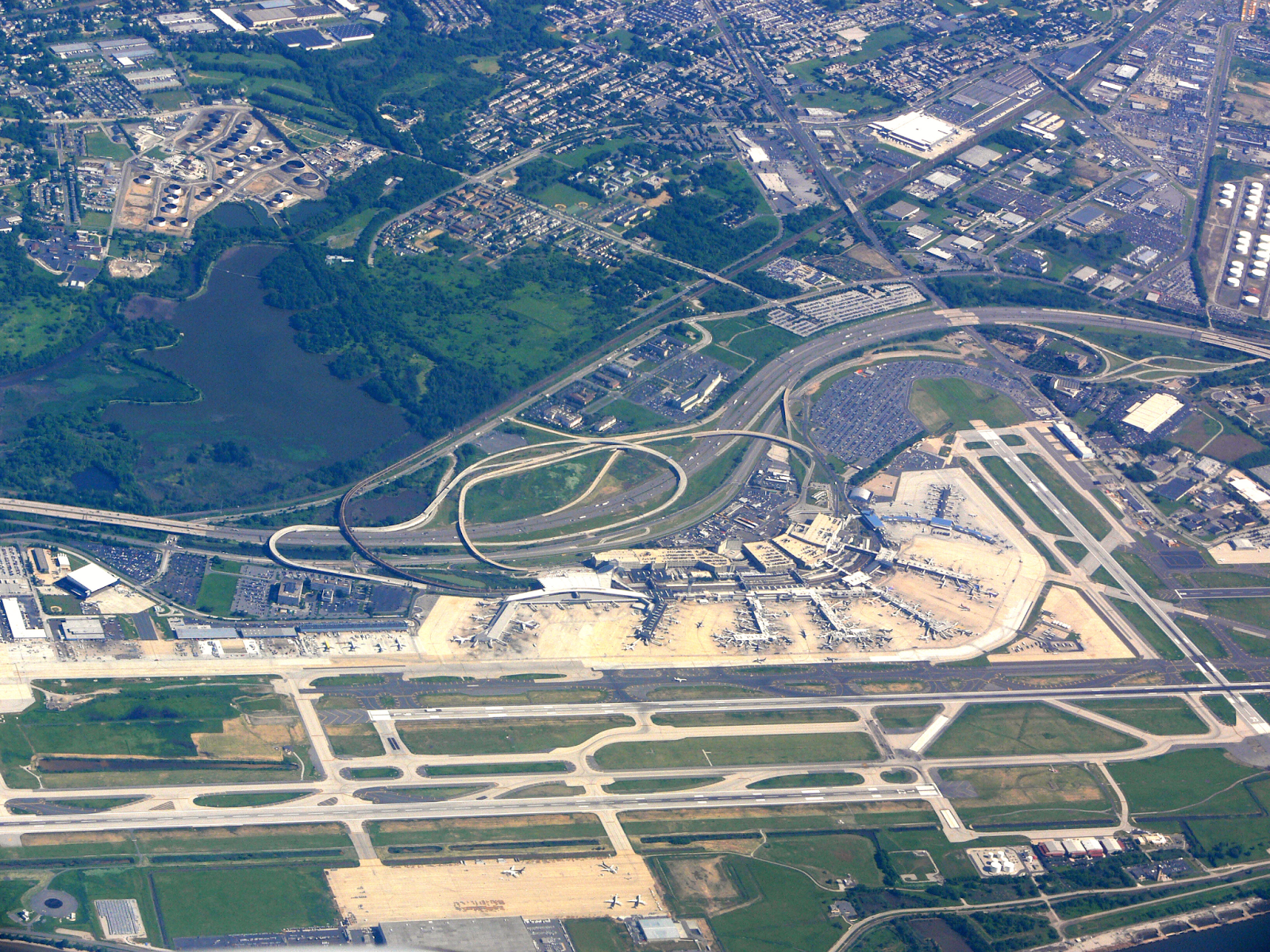
Since its inception, Philadelphia Airport has never stopped operation. During World War II, it served as a training site for US Army Air Force pilots. Groups of pilots for various types of military aircraft were regularly formed and trained here. From these individuals, the Philadelphia Fighter Wing was formed. Pilots were also reassigned to different units and dispatched to Europe.
Following the attack on Pearl Harbor, the main mission of the Philadelphia Fighter Wing was to provide air defense for Delaware County and the airport territory.
In 1943, the territory of the airport was transferred to the Air Technical Service Command. Aircraft repair units have begun operations here. The repaired transportation was swiftly sent back to the front. In addition, a radio equipment operation and repair school was established.
Philadelphia Airport reopened to the public in September 1945, and passenger traffic gradually resumed. The same year, it gained international significance thanks to American Overseas Airlines and its flights to Europe. At the time, this was the only option for a direct flight in this direction.
In 1950, the airport had four runways measuring up to 1,646 meters long. Lane 9 was extended to 2,220 meters in 1956, and three years later, it had already reached 2,896 meters. In addition, in 1953, a new terminal was opened, and construction of additional terminals began.
Since then, the era of continual expansion and development at Philadelphia International Airport has begun, which continues into the twenty-first century.
Philadelphia Airport in the twenty-first century
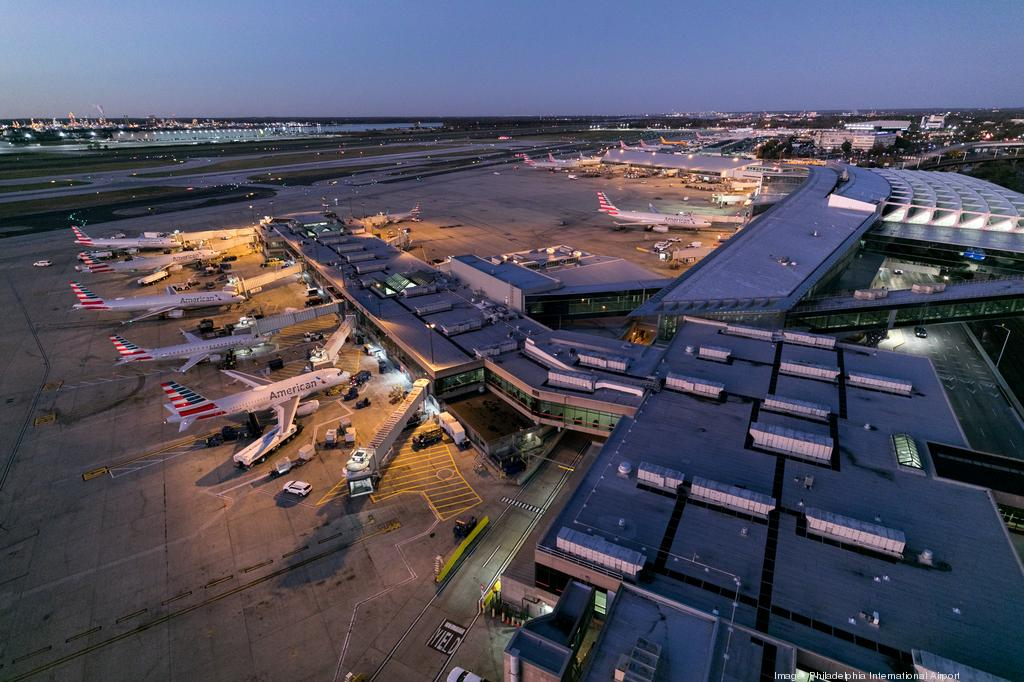
In the twenty-first century, Philadelphia International Airport is among the world’s busiest airports. Its growth rate is the highest in the United States and really impressive. This airport serves as the hub for corporations like US Airways and Southwest Airlines. As a result, the record level of passenger traffic correlates with their expansion.
In response to the surge in passenger traffic in the 2000s, Philadelphia International Airport underwent continuous development and modernization. Two new terminals were opened, nearly doubling the airport’s area to 2.4 million square feet. To assess the feasibility of the increase in passenger traffic, consider the following statistics:
- in 2004, 28,507,420 passengers passed through the airport, which was 15.5% more than in the previous year
- in 2005, the increase was 10%, with 31,502,855 passengers
- in 2006, 31,768,272 passengers visited Philadelphia Airport.
Thus, Philadelphia International Airport has confidently surpassed the 30-million-passenger mark and continues to hold it. In 2018, the airport handled 450 flights per day to 38 international and 99 domestic destinations. This has resulted in an expansion of terminals and parking lots, which remain busy on a daily basis. The airport’s popularity is further boosted by the pleasant stays of its passengers, so anyone wishing to travel to Philadelphia can find a flight to the city.