

The Philadelphia Greyhound Terminal serves as the city’s primary intercity bus station. In 2013, it ranked as the third busiest bus terminal in the U.S. Until 2023, the terminal was centrally located at 1001 Filbert Street in downtown Philadelphia. It was then relocated to 618 Market Street, nestled between Sixth and Seventh Streets. Why did this move spark passenger outrage, and how is the situation unfolding? We delve into the details on philadelphia-future.
A Brief History of the Bus Terminal
The Philadelphia Greyhound Terminal originally opened at 1735 Market Street, a site now occupied by the NY Mellon Center. After a fire at the Harrison Stores building in 1984, it was decided not to rebuild it. Instead, a new bus station was constructed on the same spot, opening its doors in 1988.
This previous terminal was quite spacious, inviting, and well-equipped. It featured ticket counters, waiting areas, restrooms, a snack bar, vending machines for drinks and food, televisions, and public telephones.
After more than 30 years of operation, it was announced in 2022 that the land occupied by the bus station was for sale, with plans to build a stadium there. While that stadium project was later canceled, the decision to relocate the bus terminal had already been made and implemented.
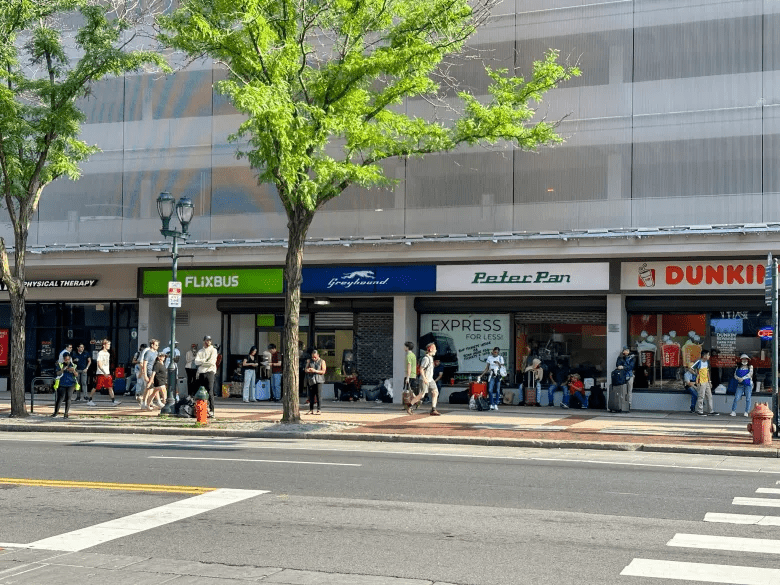
The bus terminal began operating from its new address at 618 Market Street in late June 2023. However, this move came with significant changes:
- Greyhound, the operating company, shifted from a full-service station model to roadside stops.
- The new terminal is a small building housing only ticket machines and carrier offices, with buses stopping curbside.
- The new station lacks essential amenities like restrooms or even a canopy to shield passengers from the elements.
These changes understandably sparked public outcry. Since the relocation, discussions have continued regarding the terminal’s new site and the need for comfortable infrastructure for passengers.
Why the Change? Unpacking the Relocation
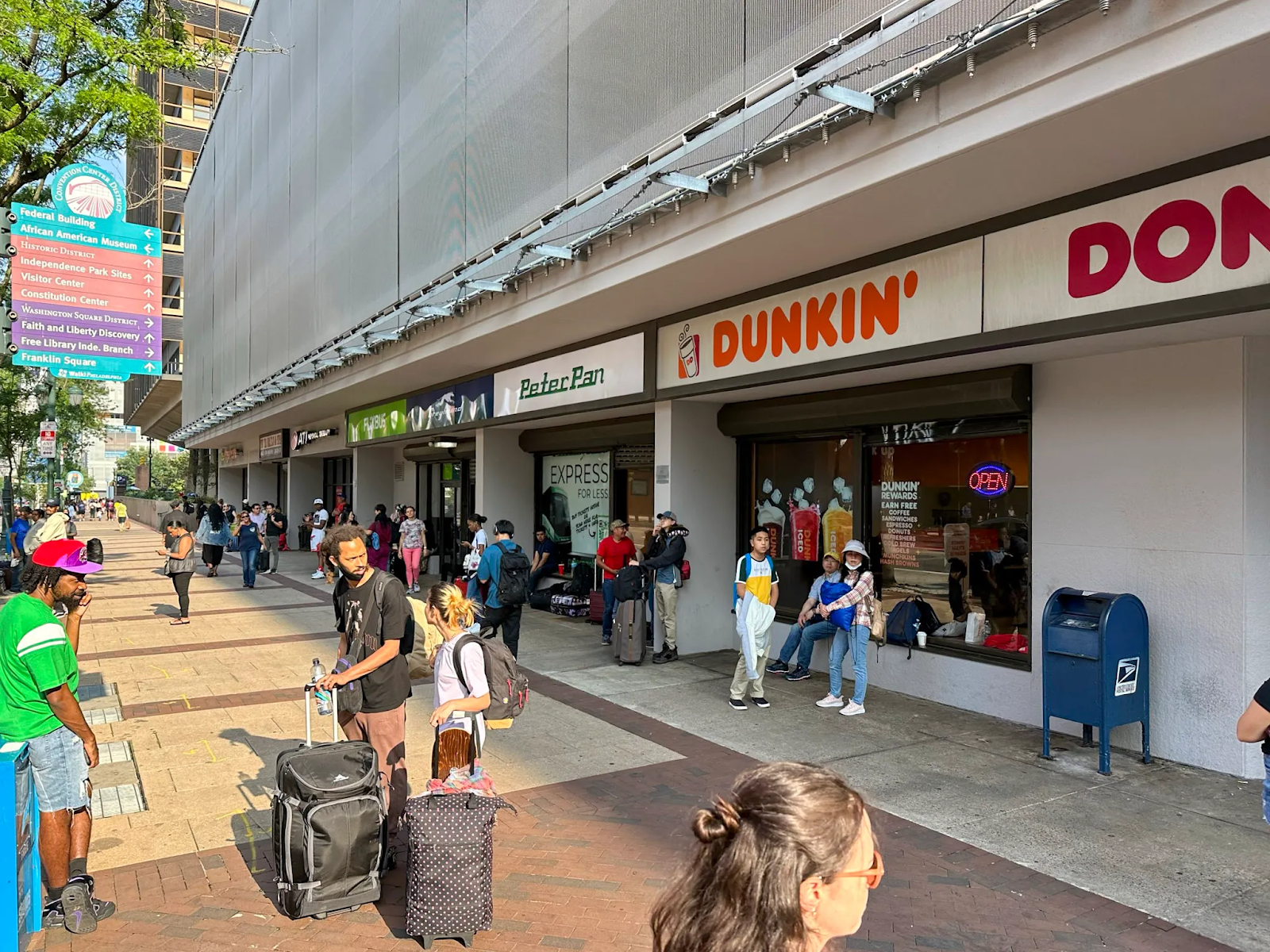
So, why did Greyhound decide to move the terminal and alter its operational model? Several factors contributed to this decision. Firstly, in recent years, Greyhound faced increased competition from newer transportation companies. These competitors began bypassing traditional bus stations, picking up passengers at curbside stops, which gradually led to a decline in Greyhound’s profits.
This shift spurred the idea of changing their operating model and moving away from a large bus terminal building, which incurred significant maintenance costs and required additional cleaning staff.
Secondly, the previous terminal employed 59 people. At least 10 of them were laid off after the move. Consequently, while salaries amounted to $2.4 million in 2022, this expenditure significantly decreased after 2023.
Finally, the old terminal’s operations were previously impacted by the loss of access to Arch Street, which was used for changing directions. This forced the company to modify the station’s entry and exit points, leading to changes in passenger boarding and alighting procedures.
Furthermore, NJ Transit complained that the turns for buses became too narrow, inconvenient, and unsafe, leading them to alter their bus routes. Their buses stopped entering Philadelphia altogether, causing significant inconvenience for passengers. Since then, many bus routes have added new transfers.
Moreover, New York-based Criterion Holdings LLC had been discussing the possibility of redeveloping the terminal’s former site for quite some time. Many expressed interest in the location, and meanwhile, Greyhound’s lease agreement for the land was nearing its end.
Therefore, the decision to relocate the bus terminal was driven by a complex set of factors. Ultimately, operating a bus station in the heart of a major city presents considerable logistical challenges. While its relocation might be justified, the lack of passenger infrastructure at the new site has understandably angered city residents.
The Old Terminal and the Station’s Future
A modern, large stadium was slated for construction on the old terminal’s site. However, the project never broke ground and was canceled in early 2025. The land currently remains vacant. The new owner has fenced it off, while still allowing for vehicle access.
The future of this location remains uncertain. The company that previously intended to build a stadium there aims to resubmit its project for consideration. If approved, the old building will be demolished, but exactly when and if this will happen is still unknown.
Meanwhile, discussions continue in Philadelphia regarding the bus terminal’s relocation and the potential return to a full-fledged, passenger-friendly building model. This process began to gain momentum in late May 2024 when the city secured a grant for similar infrastructure.
The idea of constructing a large, modern bus terminal with waiting areas, restrooms, ticket counters, and other amenities near 30th Street Station is not new. Its consideration is ongoing, giving city residents hope for the emergence of a new, state-of-the-art bus station.