

Philadelphia’s 30th Street Station is one of the busiest railway hubs not only in Pennsylvania but across the entire country. Every day, over 100,000 passengers pass through its doors, adding up to millions annually. Opened in 1933, this station was recently recognized by “Architectural Digest” as one of the most beautiful in the world. It’s a marvel of both functionality and elegant, luxurious architecture. Read on to discover more about the fascinating history of William H. Gray III 30th Street Station, brought to you by philadelphia-future.
Philadelphia’s Railway Evolution
Before the modern 30th Street Station, Philadelphia’s primary rail hub was Broad Street Station. This stunning, towering Victorian-style building was designed by local architect Frank Furness, featuring Gothic spires and arched windows. The station first opened its doors in 1881.
As the number of trains and passengers steadily grew, the station urgently needed expansion. However, its downtown location meant it was a terminal station, preventing trains from passing straight through and significantly increasing travel times.
Meanwhile, the Pennsylvania Railroad, headquartered in Philadelphia, aimed to establish direct routes to New York and Washington and sought to expand its network. After acquiring rights to new land, they initially built an underground commuter station. Eventually, the decision was made to construct an entirely new station to replace Broad Street Station.
Building a New Landmark
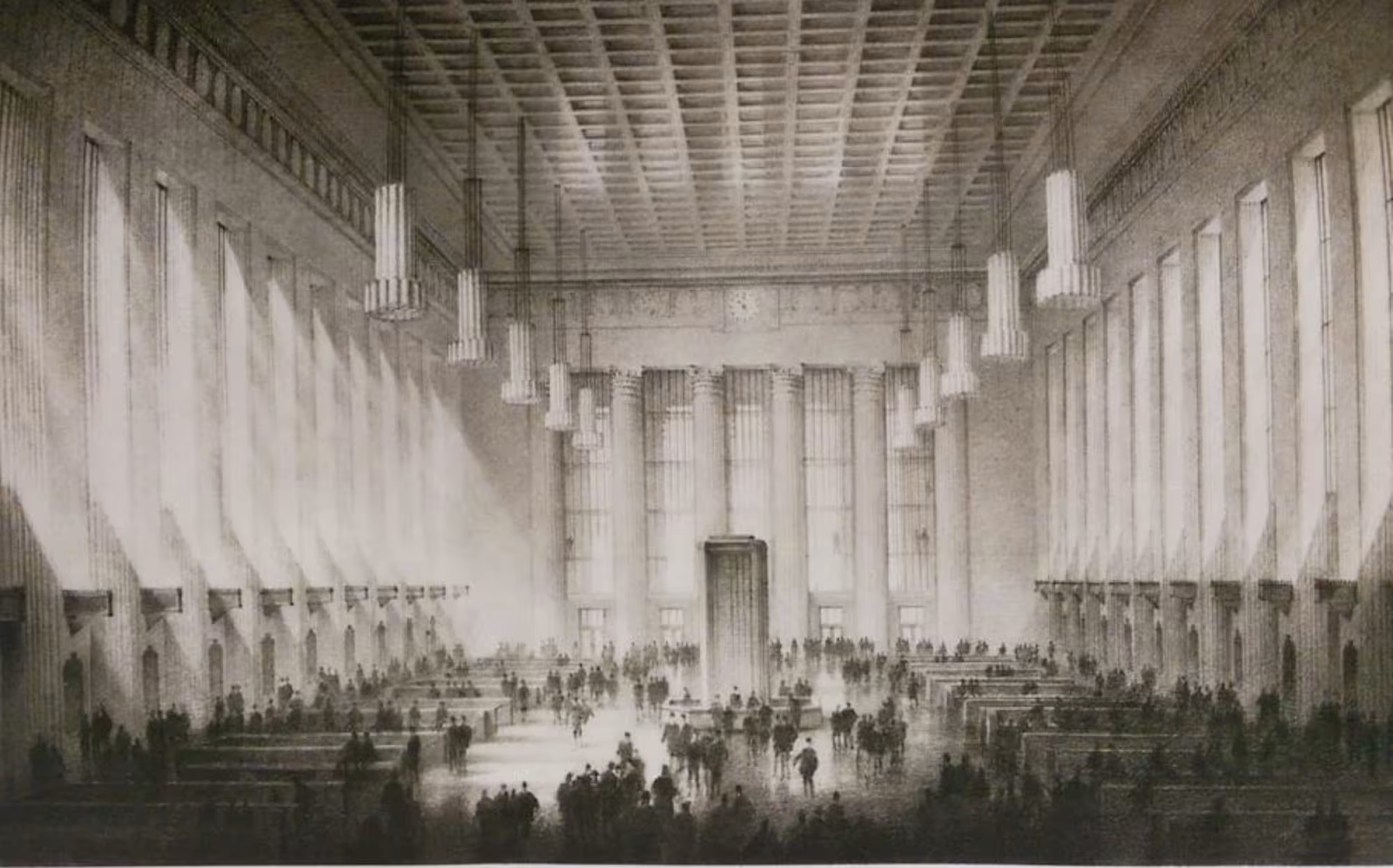
The Chicago-based firm Graham, Anderson, Probst and White took on the ambitious task of designing the future “Pennsylvania Station–30th Street.” The design was heavily influenced by the electrification of railways and the phasing out of steam engines, which allowed trains to move directly beneath the station. Innovative features of this build included a pneumatic tube system, a rooftop designed for small aircraft landings, and even an on-site hospital, morgue, and chapel.
Construction lasted from 1927. The new station with two platforms officially opened in 1933. The eight-story structure featured a steel frame and imposing Corinthian columns on the east and west facades, all clad in limestone. The station’s interior showcased decorative columns, soaring ceilings and windows, Art Deco chandeliers, and marble floors. The massive waiting hall’s ceiling was painted in striking red, gold, and cream hues.
Remarkably, most of this original ornamentation has been preserved into the 21st century. However, the station has undergone several significant reconstructions. From 1988 to 1991, the main concourse was restored, and in 2005, a 29-story office building was constructed on what was once a parking lot.
Intriguing Facts About William H. Gray III 30th Street Station
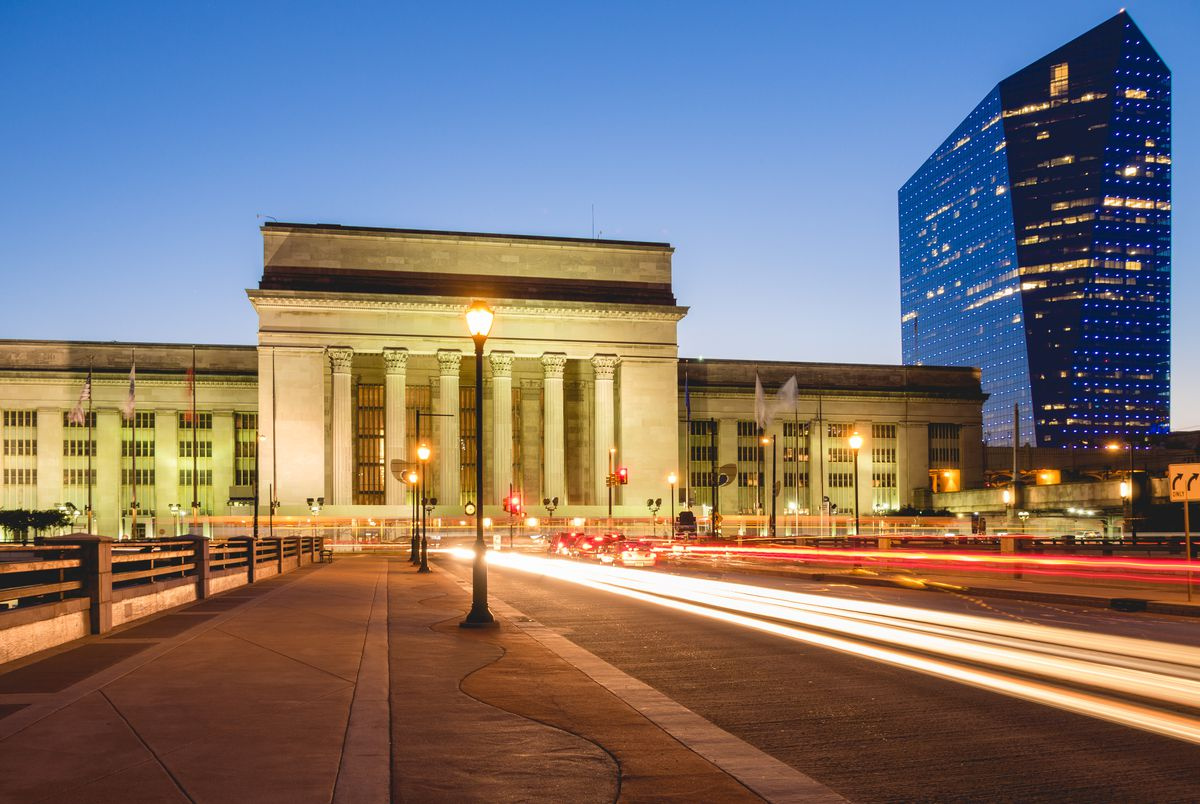
This railway hub is not just a crucial part of the transportation system; it also holds significant cultural importance. Here are some noteworthy facts about the station:
- In 1978, the station was added to the National Register of Historic Places, recognized as a prime example of majestic railway-era architecture.
- A unique feature of this station is its ability to handle trains arriving and departing in all four cardinal directions: north-south (from Boston to Florida) and east-west (from Chicago to Atlantic City). This capability is rare among U.S. stations, contributing significantly to its high traffic volume.
- Upon its opening, the station boasted numerous innovations and cutting-edge technologies for its time. One of the last remaining original features in operation was the flip-board train schedule display. It was in use until January 16, 2019, after which it was moved to the Railroad Museum of Pennsylvania. Perhaps during a future renovation, the old board will make a return to the waiting hall.
- During the design phase, a chapel was included within this transportation hub, which later served as a morgue and a hospital. Its use as a morgue became necessary during World War II. In the 21st century, the premises were converted into a conference room, which railroad employees still affectionately refer to as “the chapel.”
- Until 2014, this railway station was simply known as 30th Street Station. However, President Barack Obama approved its renaming to William H. Gray III 30th Street Station in honor of the U.S. Congressman who represented Pennsylvania from 1979 to 1991. Gray was the first African American to chair the House Budget Committee, focusing heavily on social spending and adeptly finding compromises to achieve his goals.
This is the rich history and vibrant present of Philadelphia’s William H. Gray III 30th Street Station. In 2023, a new $400 million renovation project was announced. This project aims to modernize the station’s retail and food courts, consolidate ticketing services, expand certain hall areas, and renovate offices. The work began in 2024 and is expected to take three years to complete.
Thus, the station continues to grow and adapt to modern demands and transportation needs, truly serving as the iron heart of Philadelphia.