
Lincoln Financial Field is more than just a stadium. It is a living legend of Philadelphia, a pilgrimage site for the most passionate fans of American football. But have you ever considered what secrets lie beneath the green turf where the Eagles’ epic battles unfold?
Its history is not just a chronicle of sporting victories and defeats. It is intertwined with fierce financial struggles, city politics, and the ambition to create a sanctuary that would replace its outdated but beloved majestic predecessor stadium. How did this modern architectural complex become a reflection of the city’s unbridled spirit, and what engineering and environmental innovations turned it into one of the world’s most modern and “green” sports venues? At philadelphia-future, we uncover the story of the place where legend is born.
From the “Abyss” to the “Eagle’s Nest”
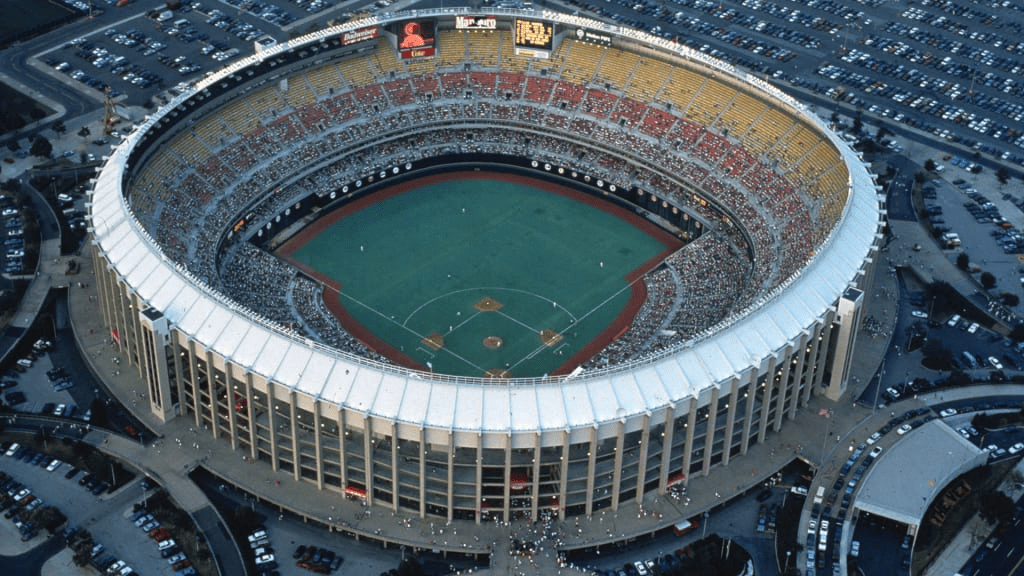
Before Lincoln Financial Field, the epicenter of these emotions was Veterans Stadium, known among fans simply as “The Vet.” This old facility, opened in 1971, was more than just a stadium—it was a symbol of the city’s rough, no-frills identity.
The old stadium, which shared space with the Phillies baseball team, became famous for its harsh, almost hostile atmosphere. It was often called “The Abyss” due to its cyclical, multipurpose design and, most importantly, its terrible field surface. The artificial turf laid in the 1970s quickly became infamous. It was hard, uneven, and, as numerous facts attest, extremely traumatic for the players.
- Injury Risk. Constant complaints about the surface and an increase in surface-related injuries became the main argument for change.
- Functional Obsolescence. By the late ’90s, “The Vet” was hopelessly outdated. Its layout did not meet modern NFL requirements for suite placement, spectator comfort, and media infrastructure.
- Quest for Identity. Most importantly, the Eagles sought their own, unique home that would not be shared with baseball. This was a demand for a pure, undivided American football identity.
The decision to build a new, modern arena in the early 2000s was inevitable. It was an emotional break from the past, driven by the stark necessity to provide adequate conditions for players and give Philadelphia fans a stadium worthy of their passion. Thus, Lincoln Financial Field was born as a direct response to the functional and emotional shortcomings of its predecessor.
Stadium Construction: Financial Battles and Environmental Ambitions
The decision to build a new home for the Philadelphia Eagles resulted in a complex, multifaceted project that required not only engineering solutions but also political finesse. The construction of Lincoln Financial Field, often called “The Linc” by fans, became a demonstration of new approaches to financing sports venues in the early 2000s.
The total cost of construction, which began in 2001, reached about $520 million. The financial scheme was complicated and became the subject of loud public debate, typical of the time. A significant portion of the funds, namely over $200 million (about 40% of the total), came from public sources—the State of Pennsylvania and the City of Philadelphia. This caused considerable public outcry. Critics sharply questioned why public money, intended for social needs, was being directed to finance a commercial sports arena. The remainder of the sum was secured by private investment, including contributions from the team owners and the sale of naming rights. The financial company Lincoln Financial Group purchased these rights for 20 years, becoming a critically important source of private capital.
Design and Innovation
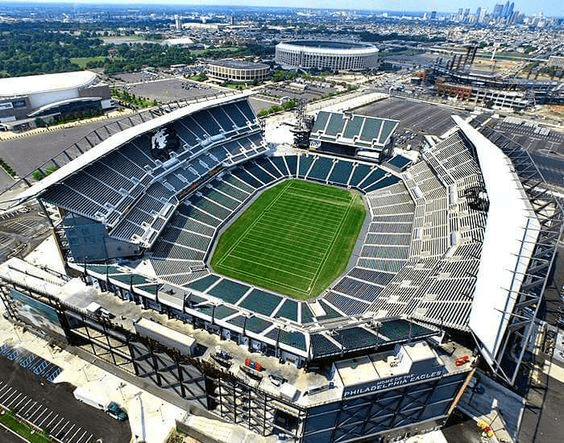
The project was developed by the architectural firm NBBJ. The key task was to create an arena that would maximally amplify the crowd noise, mimicking the intense, even aggressive atmosphere of the old “Vet,” but with all modern amenities. The stadium features an open-air design with panoramic views of the city skyline, visually integrating it into Philadelphia. The corner seating is positioned as close as possible to the field, creating the desired “cauldron” effect for opponents.
One of the most innovative aspects was the commitment to environmental sustainability. Although not fully realized immediately, “The Linc” later became a global leader in the use of renewable energy sources, installing solar panels and wind turbines as part of the Go Green program. This was a conscious step by the team owners that distinguished them from competitors. The natural grass turf used on the field was a direct answer to the traumatic artificial surface that disgraced the previous arena.
Project Challenges
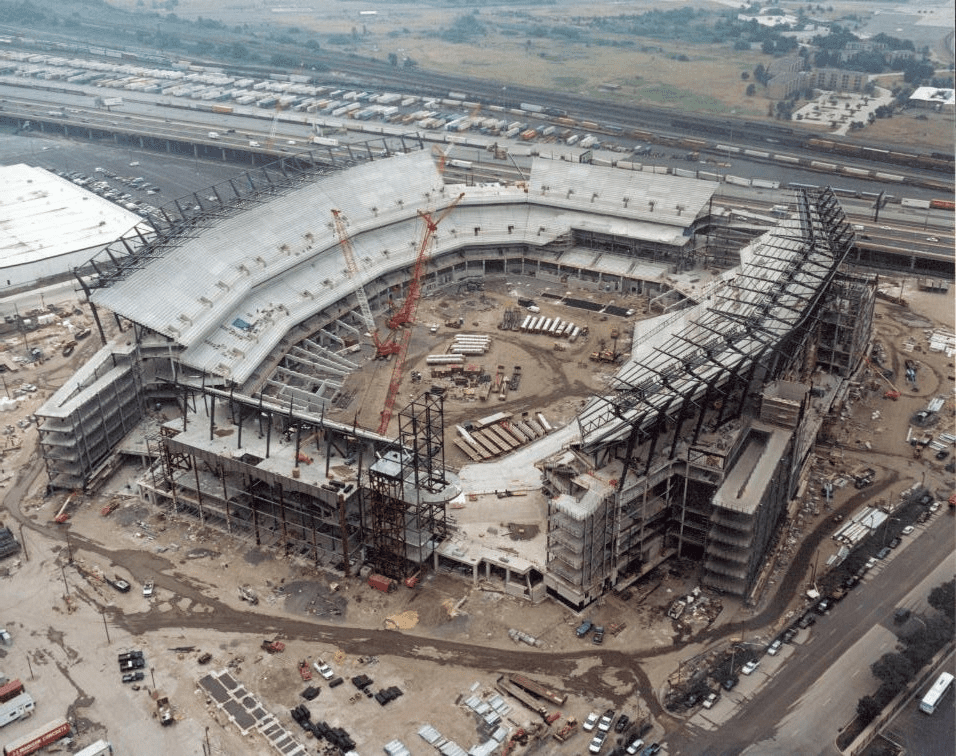
Construction was completed on time for the 2003 season, a major achievement considering the complexity of the financing and political pressure. The new venue was built in the southern part of the city, near the site where the old Veterans Stadium once stood, thereby preserving a historical link to Philadelphia’s sports complex.
Key facts about the construction of Lincoln Financial Field:
- Cost. Approximately $520 million, with a significant share of public investment.
- Design. Created to amplify acoustics and maximize spectator proximity to the playing field.
- Ecology. Launched the ambitious Go Green program using renewable energy sources.
- Opening. Commissioned just before the 2003 NFL season.
- Controversy. Disputes over the use of public funds ($200M+) for a private commercial facility.
The Home Fortress of the Philadelphia Eagles
For the Philadelphia Eagles, Lincoln Financial Field is the true center of one of the most passionate fan bases in the NFL. The acoustic characteristics of the arena are often cited by opponents as a factor of pressure.
The stadium has witnessed many key moments in the club’s history:
- Winning Seasons. The arena hosted numerous playoff games and NFC Championship Finals.
- Symbolic Moments. On this field, the Eagles celebrated outstanding victories that preceded their triumph in Super Bowl LII (though the Super Bowl itself was not held here).
- “The Historical Bell.” To honor notable victories, the “Liberty Bell”—or rather, a replica—is rung in the arena, which does not diminish its symbolism.
The clever arrangement of the stands and the high level of fan service have contributed to strengthening the culture of Philadelphia football.
Football, Soccer, and Concerts
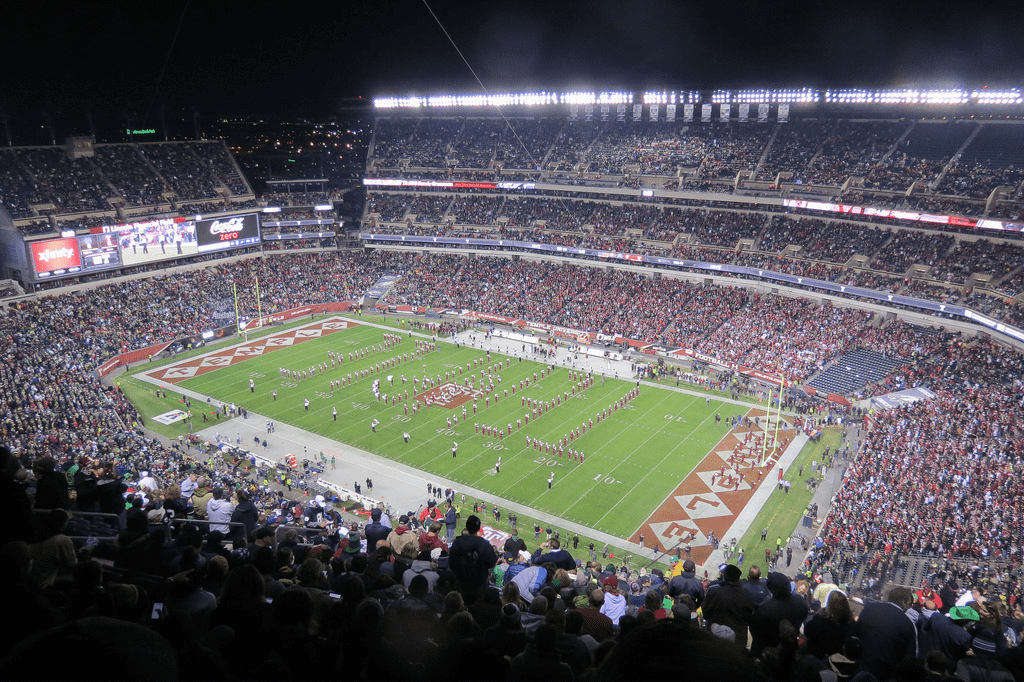
Although NFL football is the primary purpose of the complex, Lincoln Financial Field was designed as a multi-functional arena. It regularly hosts significant non-NFL events.
- College Football (Soccer). The stadium is the home field for the Temple Owls club, representing Temple University. Additionally, the arena regularly hosts international matches and tournaments, including US National Team matches and International Champions Cup games.
- Concerts. World stars have performed at the arena, such as Taylor Swift, Coldplay, Bruce Springsteen, and others. Large-scale shows utilize the spacious turf and open-air design.
- Other Events. The sports complex has also hosted lacrosse matches and large public gatherings.
This multipurpose strategy ensures a high level of utilization and economic return on investment.
Leader in Green Technology
Lincoln Financial Field is renowned for its commitment to environmental sustainability and green initiatives. The Eagles’ owners have invested heavily in modernization and green technology, transforming the arena into an exemplary sports facility.
Key Environmental Achievements:
- Solar Panels and Wind Turbines. The installation of a large-scale system of solar panels and small wind turbines provides a significant portion of the required electricity. This makes the stadium one of the most environmentally friendly sports venues in the US.
- Waste Management. Implementation of a comprehensive recycling program aimed at minimizing the volume of waste sent to landfills.
- Energy Efficiency. Replacing old lighting with LED systems and automating energy consumption management.
These environmental efforts have reduced operational expenses and affirmed the team’s social responsibility to the city.

