

One of Philadelphia’s most famous landmarks, located in the historic heart of the city, is Independence Hall. This majestic building is depicted on the back of the U.S. $100 bill, and for good reason. Learn more at philadelphia-future.
For American society, this is a truly special place. Here, the true history of modern America was forged. Ask locals about Independence Hall, and you’ll not only hear about its construction but also fascinating details like the signing of the Declaration of Independence and the U.S. Constitution. And yes, all of it happened right here, in the very center of Philadelphia, within the walls of Independence Hall.
Who Designed the Building?
The design for Independence Hall was conceived in the 18th century by American architects Edmund Woolley and Andrew Hamilton. As early as 1729, local residents began discussing the construction of a state house in Philadelphia. A considerable sum was raised for its building—over two thousand pounds sterling.
Scottish lawyer Andrew Hamilton was appointed to the committee overseeing the plans for Independence Hall’s construction. Along with him, merchant Thomas Lawrence and John Kearsley were also on the committee, responsible for selecting the building site and approving the workers.
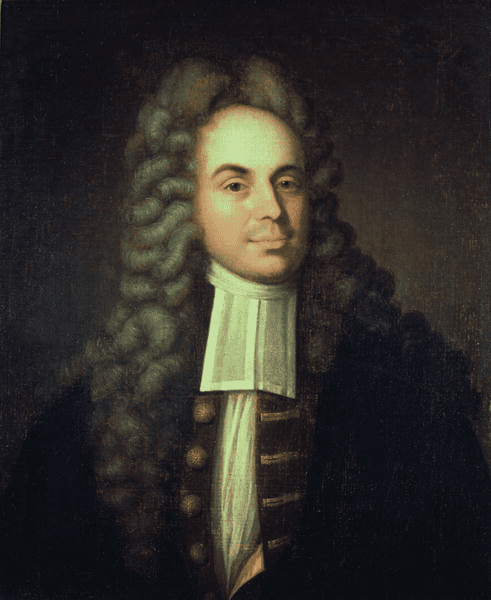
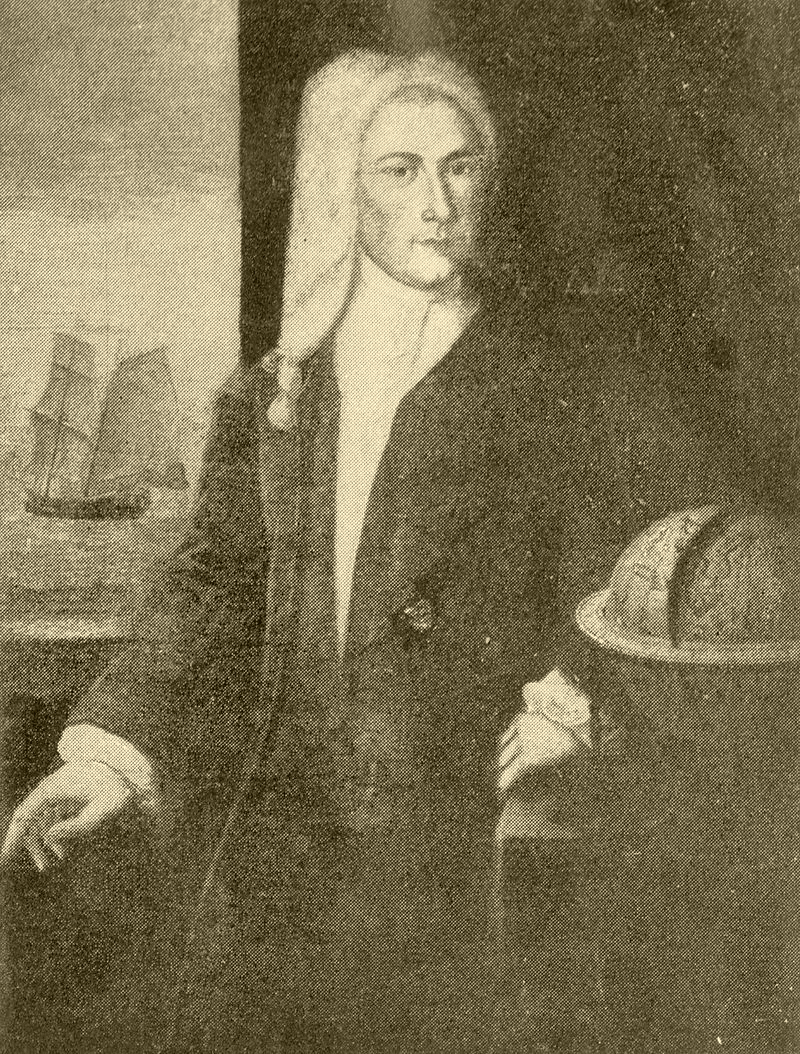
In the 18th century, Hamilton and merchant William Allen acquired the plot of land now known as Independence Square in Philadelphia. It was decided to erect Independence Hall on Independence Square, intending to use it as a legislative assembly hall. Andrew Hamilton developed the initial design for the building, but the final decisions were made by the American architect of English descent, Edmund Woolley, who joined the project in 1732.
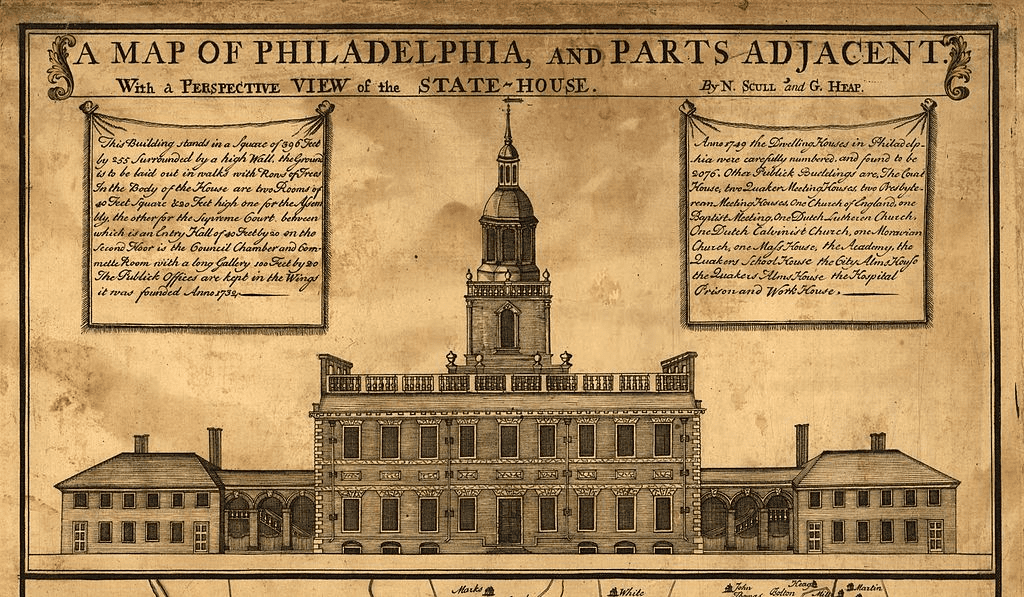
Woolley worked on the building with his apprentices but couldn’t complete its construction during his lifetime. The structure was finished only after his death. It took Edmund Woolley approximately 16 years to build Independence Hall, also known as the State House. After his death, the transfer of the land and the state house to the province was carried out by his son and son-in-law.
Initially, the building housed the colonial government of Pennsylvania. It served as the State House from 1732 to 1799.
What Makes Independence Hall Stand Out Among Philadelphia’s Historic Buildings?
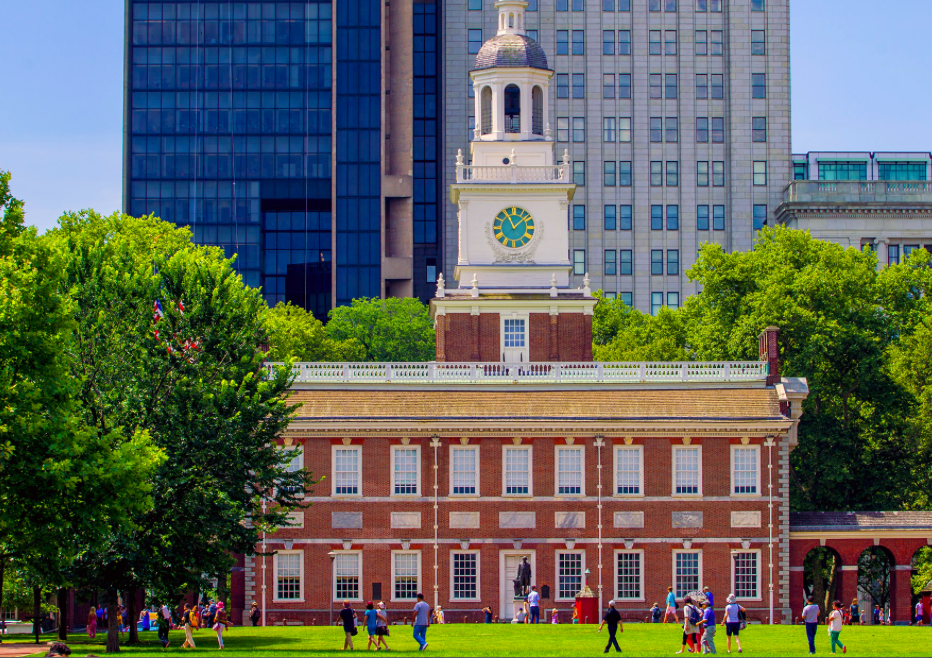
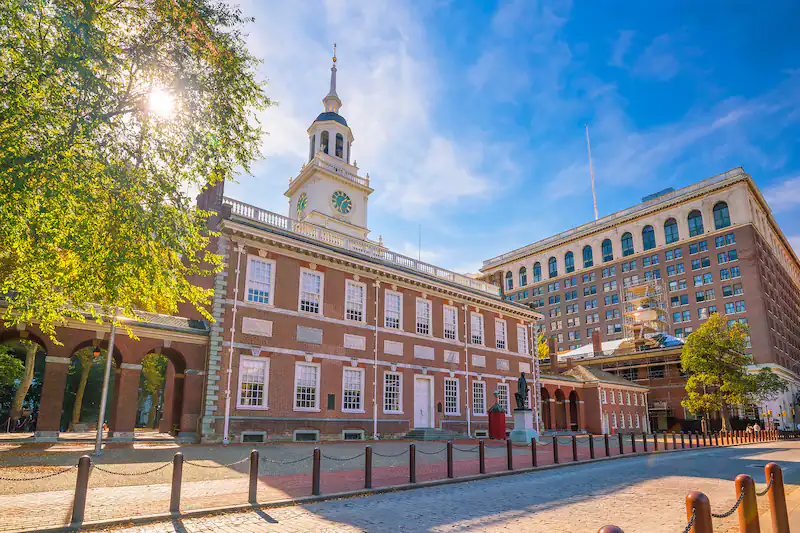
Independence Hall’s facade distinguishes it from all other structures in Philadelphia. The building is constructed entirely of red brick, with its highest point reaching 41 meters (approximately 135 feet) above ground level. Adjacent to the modern-day Independence Hall, on both sides, are other important historic city structures: Congress Hall and the Old City Hall. The interior of Independence Hall was originally adorned with wood, a detail attributed to Brian Wilkinson and Samuel Harding.
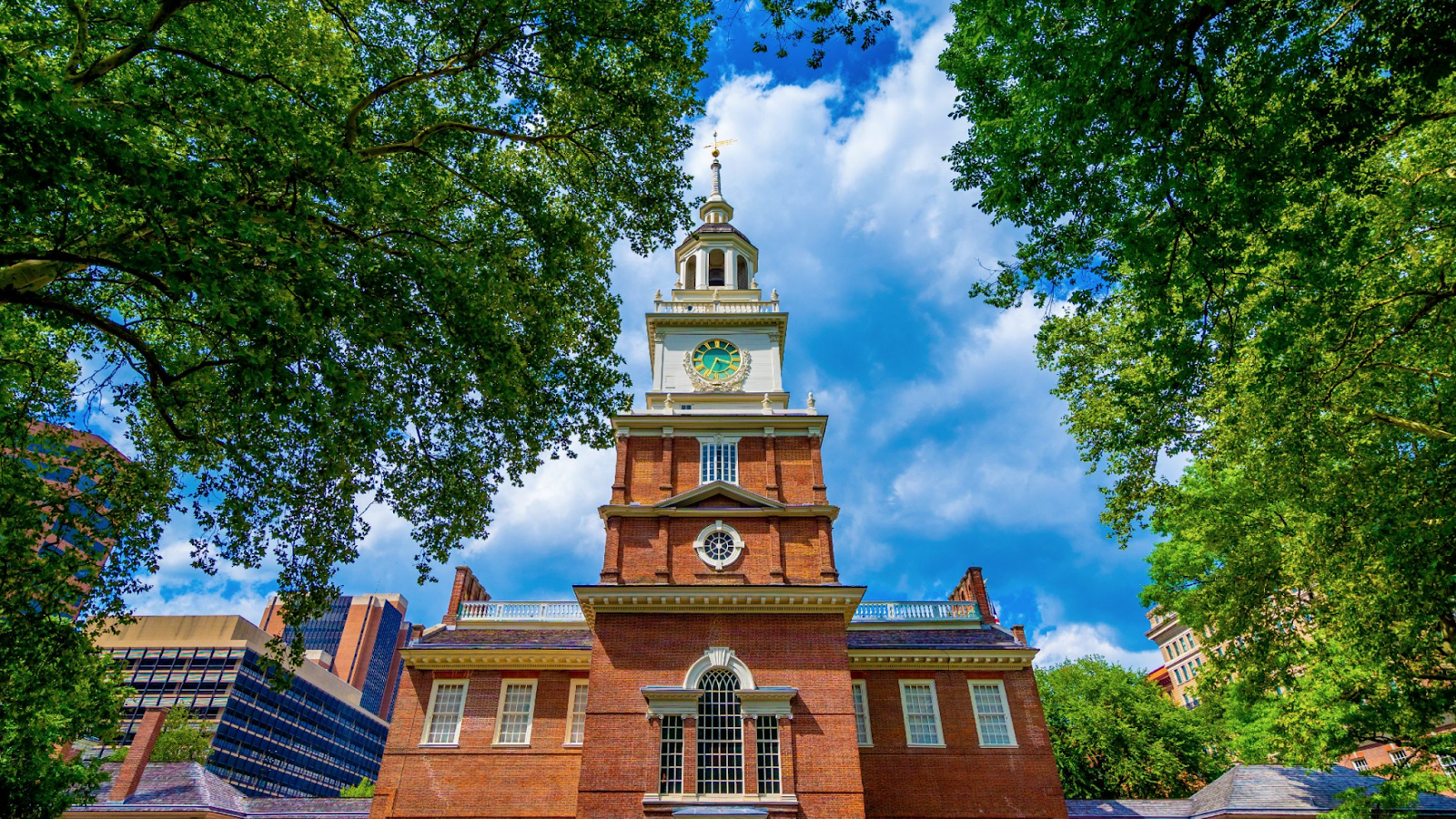
Source: photo www.visitphilly.com
Independence Hall consists of two floors and a bell tower, which is the highest point of the historic structure. Its foundation was laid somewhat later, in 1750. The building featured a grand staircase and supported a wooden spire. The exterior of the tower was completed three years later, and the interior work six years after that. A bell, now famously known as the Liberty Bell, was commissioned for the tower. On the second floor of Independence Hall, a banquet hall and conference room were set up.
The famed Liberty Bell was originally intended for installation at the highest point of Independence Hall—the tower. However, its place is now occupied by another bell, the Centennial Bell, manufactured in 1876. The Liberty Bell itself is an open historical artifact, displayed as an important exhibit for tourists.
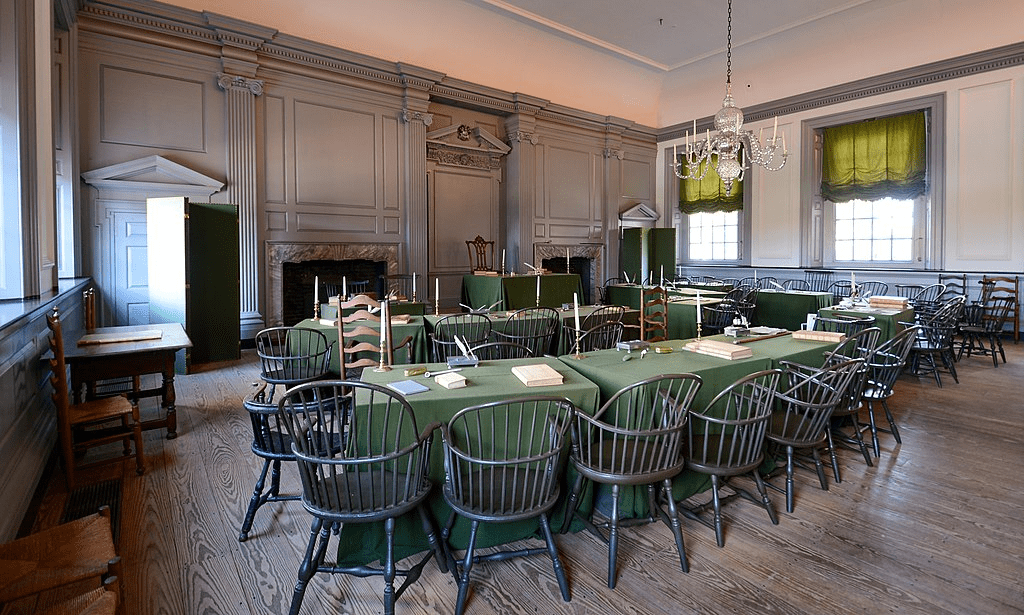
Throughout its centuries-long existence, Independence Hall has undergone numerous changes and reconstructions. In the mid-19th century, it was rebuilt. Following J. Haviland’s design, the building’s style was changed to late Classicism (Greek Revival). In 1950, the question arose of restoring Independence Hall to its original appearance. Through the combined efforts of the National Park Service Committee, the building’s look was successfully returned to its historic 1776 sample.
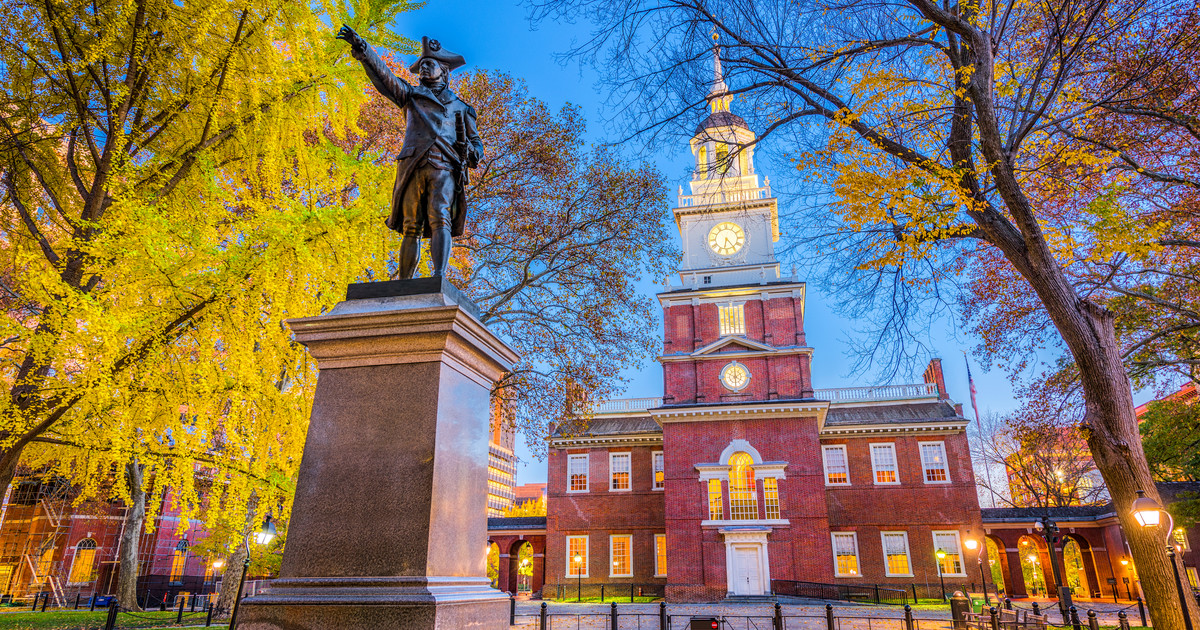
In 1753, a large clock was installed on the west side of Independence Hall. Its dial was crafted by the talented Samuel Harding. The old one was removed from the building in 1830. Isaiah Lukens designed a new clock in 1828, which adorned the facade until 1877.
Today, Independence Hall is a reconstruction. The original appearance of some rooms has been successfully restored, bringing them back to their 18th-century state. In 1973, a replica of the clock designed by Thomas Stretch was created.
The Continental Congress in Independence Hall
Within the walls of Independence Hall, the modern history of the American nation was forged. After the building’s completion, the Continental Congress began its work there. The Second Continental Congress convened in Independence Hall from 1775 to 1783. It was in this very place that its representatives adopted the Declaration of Independence.
This historically significant document proclaimed the independence of the British colonies in North America from Great Britain. The decision was made unanimously. The Declaration was adopted on July 4, 1776. Since then, Americans celebrate Independence Day every year on July 4th.
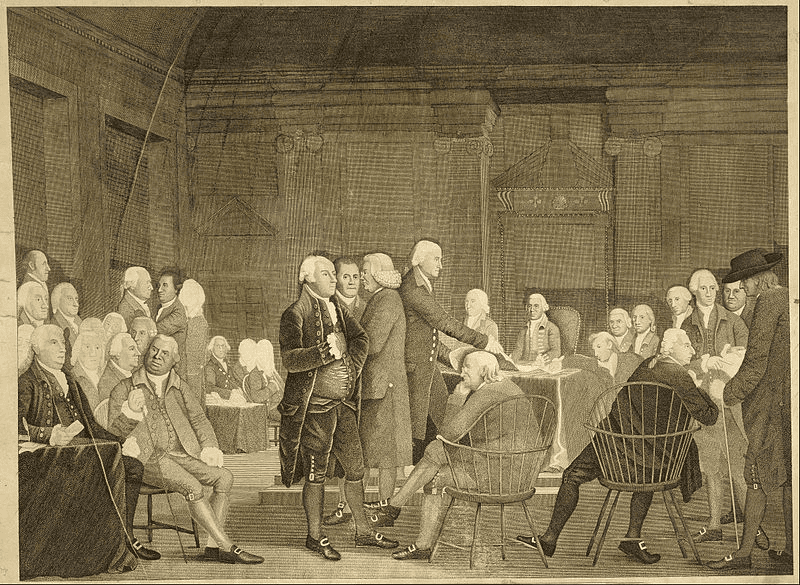
In the hall of Independence Hall, delegates in 1775 elected the commander of the Continental Army. That commander was George Washington, who would become the first popularly elected President of the United States of America. And on July 26 of that same year, Founding Father Benjamin Franklin was appointed Postmaster General, the chief executive officer of the United States Post Office. He became the first to be chosen under the Continental Congress.
The Declaration of Independence was read aloud to the entire public at the spot now symbolically known as Independence Square.
The Adoption of the Constitution
In 1787, another significant gathering took place within Independence Hall. The discussions focused on improving the Articles of Confederation and amending certain laws. Delegates, with the exception of Rhode Island, accepted the invitation to the Philadelphia assembly. This resolution went down in history as the Constitutional Convention. It’s well known that a major clash unfolded at the Convention between representatives of two constitutional models. Amidst this debate, the delegates moved towards creating a crucial document—the U.S. Constitution.
On September 17 of that same year, a momentous event occurred in the United States of America that completely changed the course of the young nation’s history. Within the present-day Independence Hall in Philadelphia, the U.S. Constitution, the supreme law of the land, was signed. Subsequently, it was ratified by 30 then-existing states. The signing of the Constitution in Philadelphia involved representatives from 13 states.
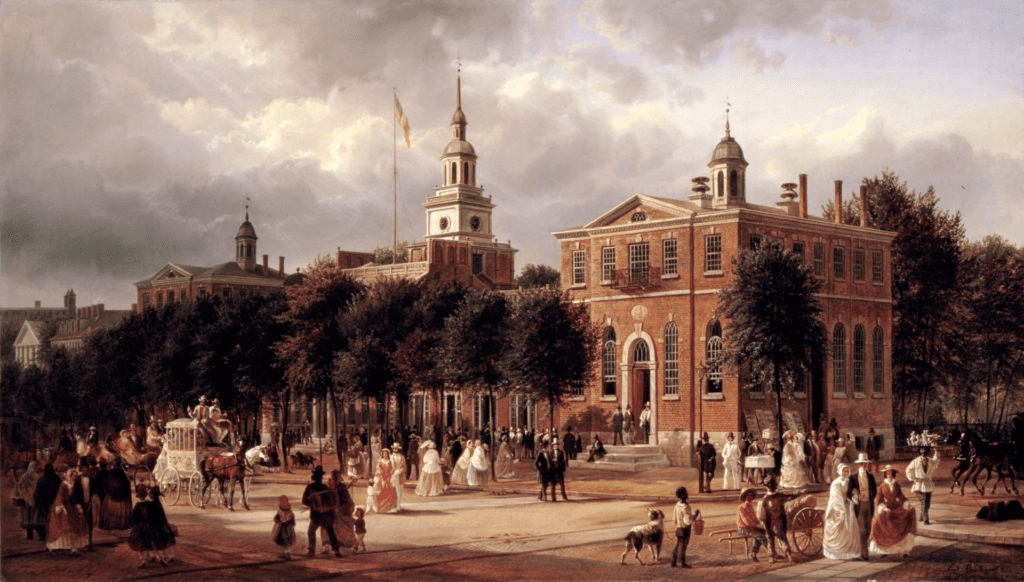
In the year the Constitution was signed, the conference room of Independence Hall was unbearably hot. Delegates deliberated for several hours behind closed doors and windows. No one could see or hear the issues being resolved during the discussion. American political figure James Madison, who would become the 4th U.S. President, kept some records from the Convention. Thanks to him, details of the 18th-century meetings and the thoughts and views of various political figures are revealed. The completed Constitution was presented to all 30 existing states in America. However, it was not immediately approved.
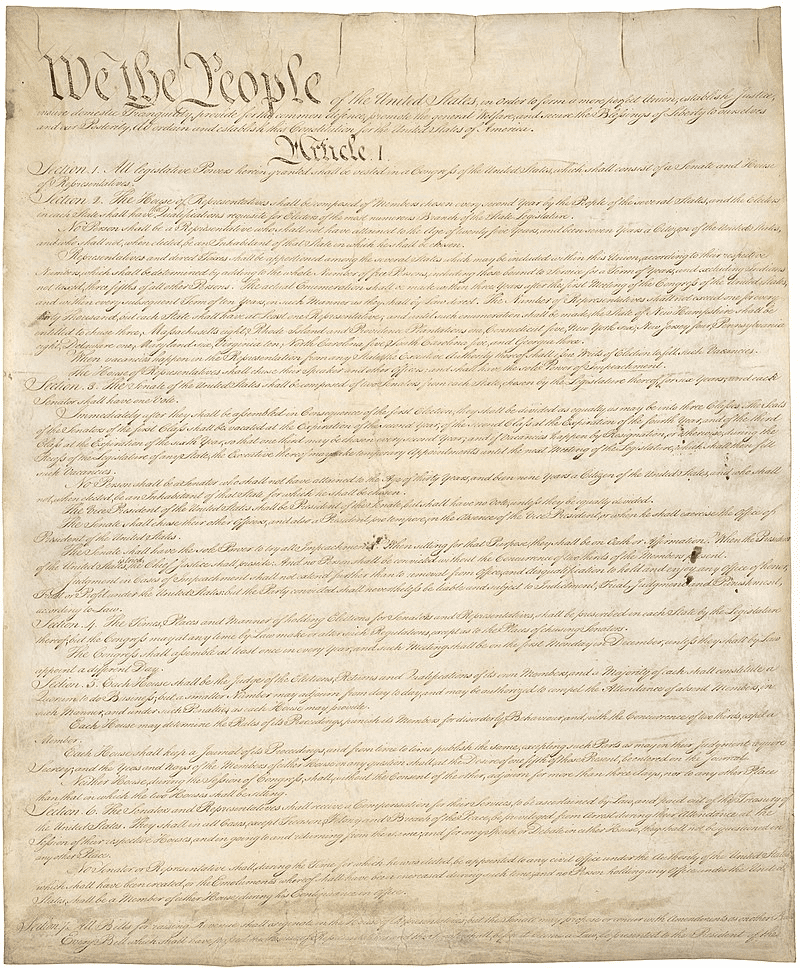
The U.S. Constitution
The U.S. Constitution was signed in the Assembly Room. Today, strolling through Independence Hall allows you to step into this historic space. And at the entrance, a statue of George Washington, the first U.S. President, warmly greets visitors.
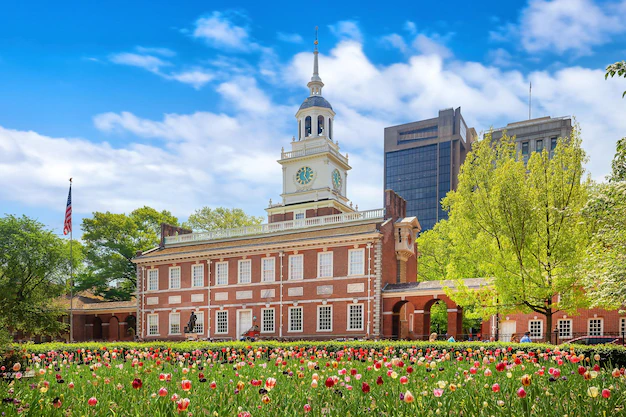 Source: photo www.freepik.com
Americans hold their historical past in special reverence. George Washington is considered not only a good politician but also a president who did much for his homeland. As head of state, he strengthened alliances and embodied all the principles laid out in the Constitution.
In 1816, the building was sold to Philadelphia by the Commonwealth of Pennsylvania. Since then, it has effectively been city property. Independence Hall remains under constant protection.