

The Rittenhouse Hotel in Philadelphia is an exquisite and inviting haven for city guests, boasting a rich history. The square where the building stands was named in honor of David Rittenhouse, a renowned astronomer and mathematician born in Philadelphia. Eventually, the hotel adopted the same name. The first building on this site emerged in 1913, designed by architect Paul Cret. We’ll delve into its history and transformation into a celebrated hotel in this article on philadelphia-future.
The Hotel’s Origin Story
The first structure erected on the site of the present-day Rittenhouse Hotel was a residential mansion. In the early 20th century, it became home to Alexander Cassatt and his wife, Lois:
- Alexander Cassatt led the Pennsylvania Railroad and was instrumental in its expansion to New York and the construction of Pennsylvania Station.
- His wife, Lois, was actively involved in Philadelphia’s social scene.
- Her sister, Mary, was a noted printmaker and painter; she visited France, and her works were exhibited at the Paris Salon in 1868.
In memory of Mary Cassatt, the modern Rittenhouse Hotel has a lounge named after her, where its famous afternoon tea is served.
The Cassatt family didn’t reside in the house for very long, eventually selling it to the Episcopal Church of Pennsylvania. It then became the organization’s headquarters. Subsequently, the Notre Dame Academy, a private Catholic school, was founded here. Local boys and girls attended, and its notable alumni included Ethel, John, and Lionel Barrymore, who became famous actors belonging to a well-known theatrical dynasty.
After this project ceased operations in the building, the question of its future use arose. The answer came in the form of creating a hotel, capitalizing on its convenient location and scenic views.
Transformation into a Hotel
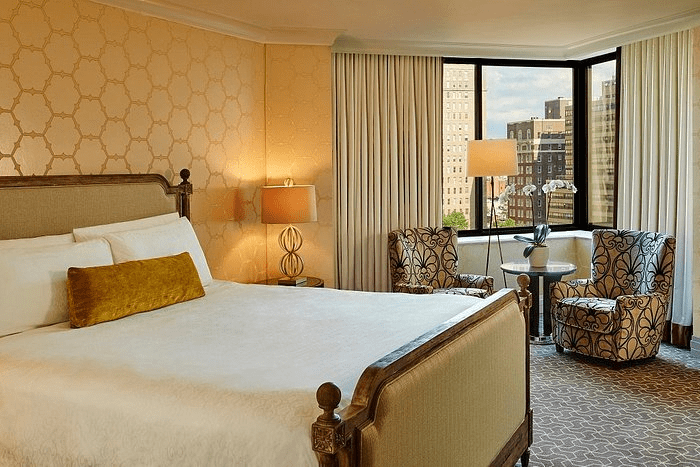
The design for a five-story hotel on the existing building’s site was developed in the late 1960s by architect Donald Reiff. He aimed to leverage the building’s location to provide guests with unparalleled views of the square and the city.
Construction began in the 1970s and lasted for over a decade. The Rittenhouse Hotel officially opened in 1989, making it one of the city’s older luxury hotels. Its design delivered on the promised views of the square, with room windows specifically engineered to capture this iconic scenery.
While the building has undergone renovations and updates since then, its unique style and distinctive features remain intact. From its inception, the hotel was designed to showcase history and sophistication. The developers sought to preserve the spirit of an early 20th-century Philadelphia mansion, allowing guests to fully immerse themselves in its atmosphere.
The Modern Rittenhouse Hotel
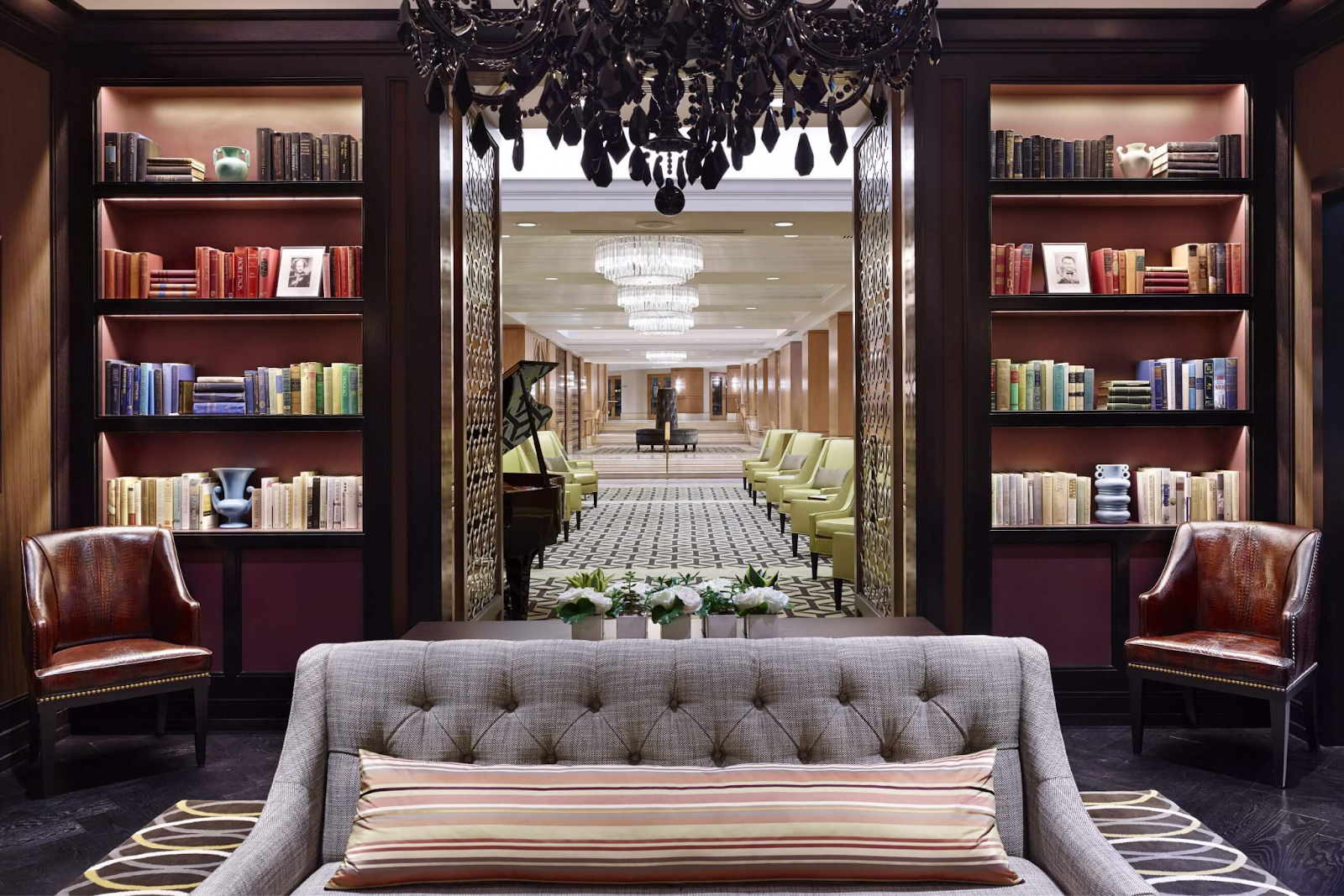
The first significant renovation of The Rittenhouse Hotel took place in 2012, encompassing public areas, standard rooms, and suites. Design firms from New York, Champalimaud and Bill Rooney Studio, oversaw these changes. The final phase of the renovation was completed in 2019.
This hotel masterfully blends luxury with understated elegance. You won’t find flashy or overwhelming objects in the rooms. Instead, the entire interior demonstrates a balanced symmetry and purposeful organization of space for guest comfort. Areas like the renovated library bar showcase Philadelphia’s history as part of their decor. Here, a classic fireplace is nestled among bookshelves. Soft lamplight falls on books about Philadelphia and art. Leather and linen upholstered armchairs are placed next to exquisite glass coffee tables. A mirror above the fireplace refracts the light from a black crystal chandelier adorning the room’s ceiling. The thoughtful contrast of light and dark creates a cozy and contemplative space that draws guests in.
The bar section of the library uses the same color palette. Its central feature is an engraved glass map of Old Philadelphia, visible behind rows of colorful bottles filled with premium beverages. A long, grand corridor with comfortable alcoves and chairs extends from the bar. Sound-absorbing carpets facilitate private conversations, making it an ideal spot to relax with friends and family for unhurried discussions on important topics.
Even after its recent renovation, the hotel retains a significant portion of its original design. It boasts 118 guest rooms ranging from 450 to 600 square feet, along with 27 suites measuring 650 to 2,000 square feet. By these metrics, The Rittenhouse Hotel is one of the largest in the city. Each room features a marble bathroom. The furniture is custom-made, ensuring a unique experience found nowhere else. Access to the rooms is gained through a gallery of books and art.
In conclusion, the modern Rittenhouse Hotel in Philadelphia successfully combines history, art, and 21st-century amenities. This makes it a highly sought-after accommodation choice for visitors to the city. Its convenient location and unparalleled views further enhance the guest experience, introducing them to Philadelphia and helping them immerse themselves in the city’s unique atmosphere.