

Philadelphia’s architecture is a captivating blend of styles, each telling a story of the city’s rich history. The first European settlements emerged here in the 17th century, marked by simple, predominantly wooden structures. As Philadelphia grew, brick buildings in Georgian and Federal styles became increasingly common. The 19th century ushered in iconic movements like Greek Revival and Victorian architecture. Then, the 20th century saw the rise of towering skyscrapers made of steel and concrete, later evolving to glass and granite. You can discover more about the city’s architectural evolution through the centuries at philadelphia-future.
Philadelphia’s Early Development
Following Philadelphia’s founding, the city’s initial expansion primarily involved wooden houses. As the population gradually grew, so did the need for administrative buildings. Thus, in 1724, the Carpenters’ Company was established, training builders and overseeing Philadelphia’s construction.
The first popular style in the city was Georgian. This architecture, prevalent in London, was brought to the U.S. from Europe, much like the Victorian style. In 1730, businessman and politician James Logan built one of the first Queen Anne-style country homes. As for the Georgian style, it was precisely what was used in the design of Independence Hall, created by Andrew Hamilton and Edmund Woolley.
A new phase in architecture began with the construction of Library Hall in 1790. This building was designed by William Thornton, who utilized the Federal style. Another example in the city is the Central Pavilion of Pennsylvania Hospital by David Evans Jr. Classicism also became quite popular at the turn of the century, with structures like the Woodlands estate and the First Presbyterian Church built in this style.
Philadelphia Architecture in the 19th Century
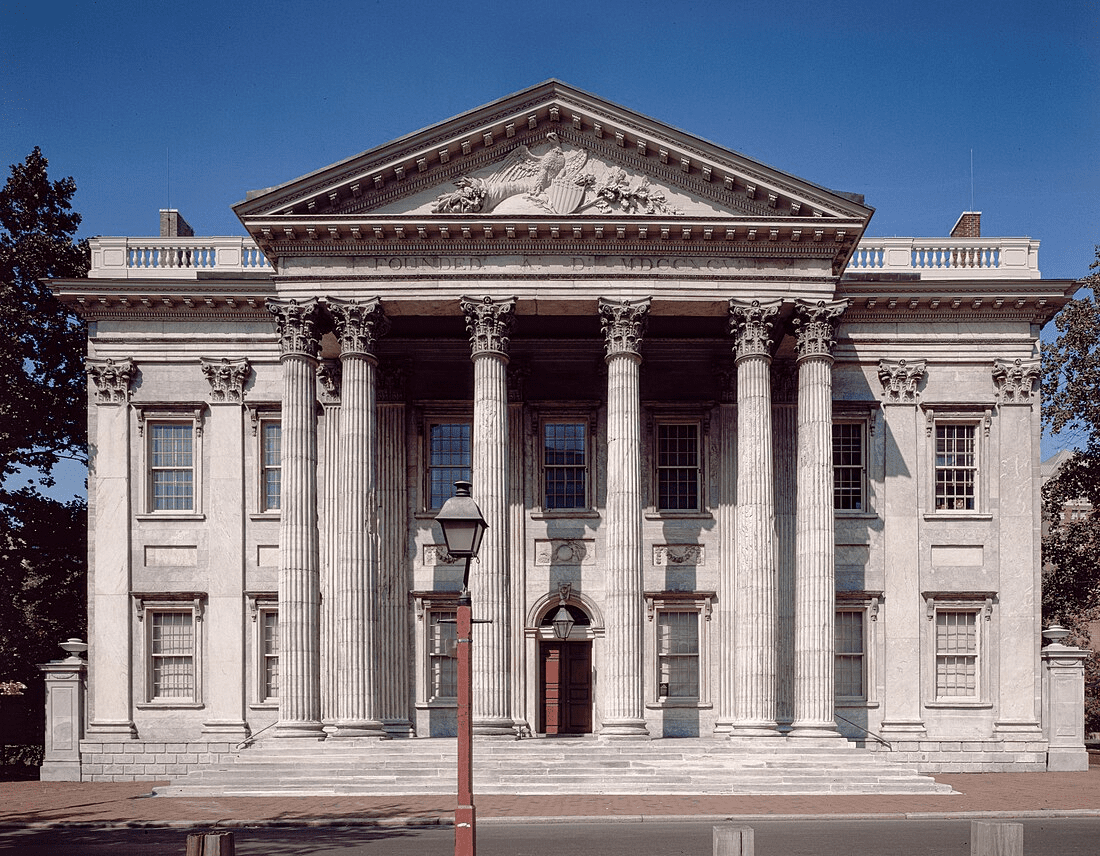
Philadelphia’s architectural history in the 19th century began with the introduction of the Greek Revival style. The first such structure was the Pennsylvania Bank, built in 1801 using white marble. Architects created porticos similar to Greek Ionic temples, along with a low dome. Subsequently, the U.S. Capitol was designed in the same style, making it popular nationwide.
During this period, several prominent architects worked in Philadelphia:
- Robert Mills, who designed the Octagonal Unitarian Church and Washington Hall. Unfortunately, his buildings in the city have since been demolished.
- William Strickland, who built the Second Bank of the United States, the Naval Asylum, the Arch Street Theatre, the Mechanics National Bank, and the Merchants’ Exchange.
- John Haviland created the city’s first shopping center called “Philadelphia Arcade,” as well as the Franklin Institute, the Walnut Street Theatre, St. George’s Church, and the Pennsylvania Institution for the Deaf and Dumb.
- Thomas U. Walter built Girard College, along with many churches, the Philadelphia County Prison, and the Moyamensing Prison.
The most famous architect in the city working in the Victorian style was Frank Furness. He designed over 600 buildings, distinguished by their bold originality and innovative use of iron and glass. Among his creations are the Pennsylvania Academy of the Fine Arts, the Knowlton Mansion, the First Unitarian Church, and the University of Pennsylvania Library.
In the mid-19th century, older buildings in the city began to be replaced. Many structures emerged, built from red sandstone, granite, and iron. Their style was quite diverse, including Greek Revival, Gothic, and Italian motifs.
In 1850, Philadelphia saw the construction of its first entirely cast-iron building. The tallest building of that era became the eight-story “Jayne Building.” Architect William L. Johnston created a Venetian Gothic facade, while Thomas U. Walter designed the observation tower. Construction was completed in 1850. This building stood until 1957.
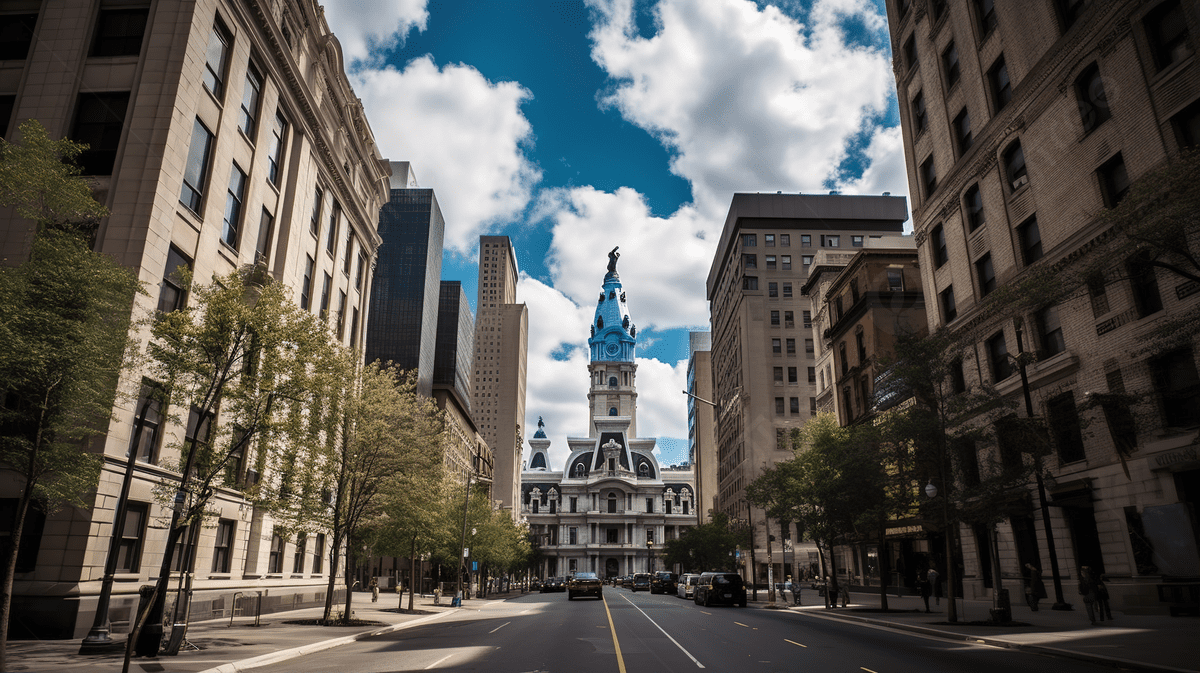
In 1871, the construction of Philadelphia’s City Hall began, lasting until 1901. This structure became one of the largest self-supporting masonry structures in the world without a steel frame. Until 1987, the City Hall tower was the tallest building in the city.
A true building boom in the city was triggered by the first American World’s Fair, organized in Philadelphia in 1876. Over 200 buildings were created for it, most of which were temporary. The massive main exhibition building was designed by Joseph M. Wilson and Henry Pettit. Among the permanent structures, the Horticultural Hall and Memorial Hall are noteworthy. The former stood until 1955 and was crafted from glass and iron in a Moorish style. The latter still exists today and is a work of art made of brick, granite, glass, and iron.
Architectural Trends of the Early and Mid-20th Century
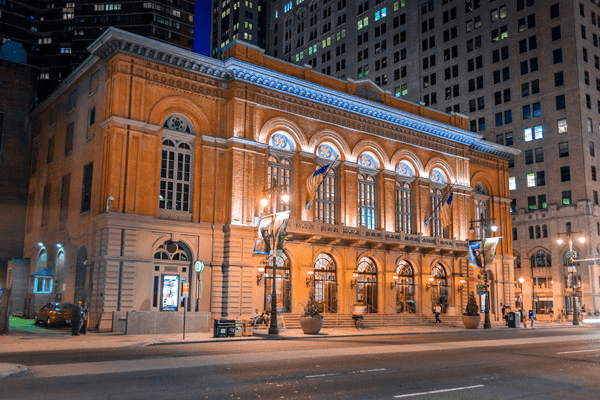
One of the major projects of the 20th century in Philadelphia was the Philadelphia Opera House. It was built in 1908 by Oscar Hammerstein I. The theater was designed to accommodate 4,000 spectators and became the largest such building in the world. Two years later, the Metropolitan Opera of New York bought it for touring performances. In the 1920s, the theater was converted into a cinema, and in the 1930s, it became a ballroom. In the following decade, the former theater became a sports venue. In 1954, it was purchased for use as a church. By the end of the 20th century, authorities considered demolishing the building, but it ultimately began to be restored.
In the early 1930s, Philadelphia saw the emergence of 30th Street Station, the Convention Hall, and the Franklin Institute. The development of multi-story residential infrastructure also took place.
Regarding other architectural trends, after World War II, modern office buildings began appearing in downtown Philadelphia. The U.S. Mint building was constructed around Independence National Historical Park. Furthermore, a new federal courthouse and many other administrative buildings were designed in the city.
The Era of Skyscraper Construction
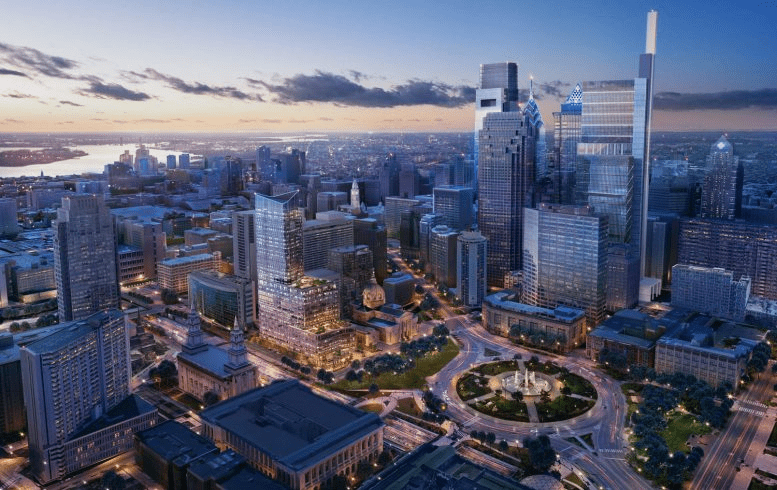
Steel and concrete skyscrapers marked the development of architecture in Philadelphia in the 20th and 21st centuries. The first of them appeared as early as the 1920s. In 1932, the first skyscraper in the International Style was built.
The first glass and granite skyscrapers began to be built in the late 1980s and early 1990s in Center City. The largest of these was Liberty Place. Its height reached 945 feet. This was the first building taller than Philadelphia City Hall. Before construction began, the city council approved this project and encouraged further skyscraper construction.
New office towers were also built in the city. For example, the Comcast Center tower became Philadelphia’s tallest building between 2007 and 2017. It was then surpassed by the Comcast Technology Center, which became the tallest skyscraper not only in the city but also in the country. Even more skyscrapers are already under construction or in the design phase.
Thus, in the 21st century, Philadelphia is primarily growing upward. Its architecture is dominated by modernism and the use of contemporary technologies. At the same time, many old structures in the city are being restored and brought back to life. Therefore, modern Philadelphia boasts a combination of diverse architectural styles. On its streets, you can literally touch the past and marvel at the astonishing present.