

Often considered Philadelphia’s most charming street, Elfreth’s Alley is nestled in the heart of the city’s Old City district. It’s more than just a picturesque spot; it’s a true national historic landmark. But what exactly makes Elfreth’s Alley so special, and why does it rank among the city’s most visited tourist attractions? Find out more at philadelphia-future.
The Genesis of Elfreth’s Alley
Elfreth’s Alley holds an iconic place in both American culture and Philadelphia’s identity. Here, visitors can truly immerse themselves in the authentic atmosphere of early America. While not every Philadelphia visitor knows about it, its central location makes it hard to miss. It stands as the oldest continuously inhabited residential street in Philadelphia.
Its history dates back to the 18th century. Elfreth’s Alley was named after Jeremiah Elfreth, a blacksmith and property owner in the area. However, its story began even earlier.
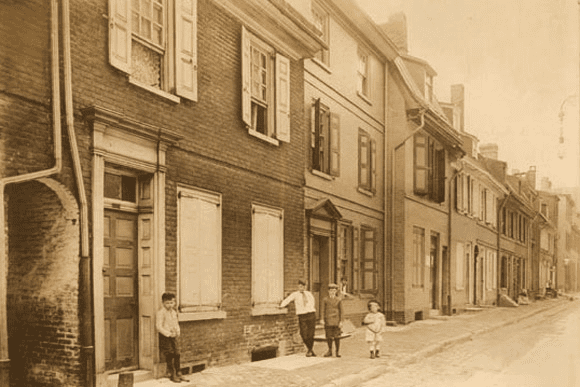
Local landowners Arthur Wells and John Gilbert initially acquired the alley for their own use, intending to utilize it as a cart path. Yet, Elfreth’s Alley quickly became settled by people and transformed into the residential street it remains today.
Wells’s and Gilbert’s actions were driven by the city’s growing population and the need for new, alternative routes to the river. They were among the first to establish a passage from Front Street to Second Street.
In the past, Elfreth’s Alley was home to people from diverse professions. Artisans, blacksmiths, jewelers, carpenters, and even artists lived here with their families. Remarkably, most of the buildings have retained their original appearance since those days.
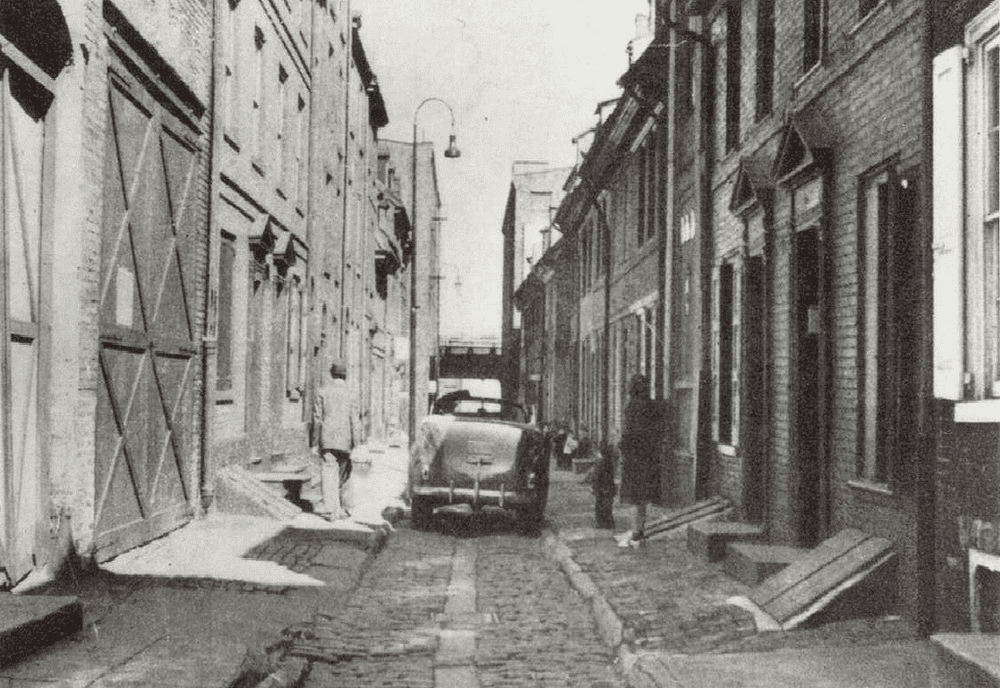
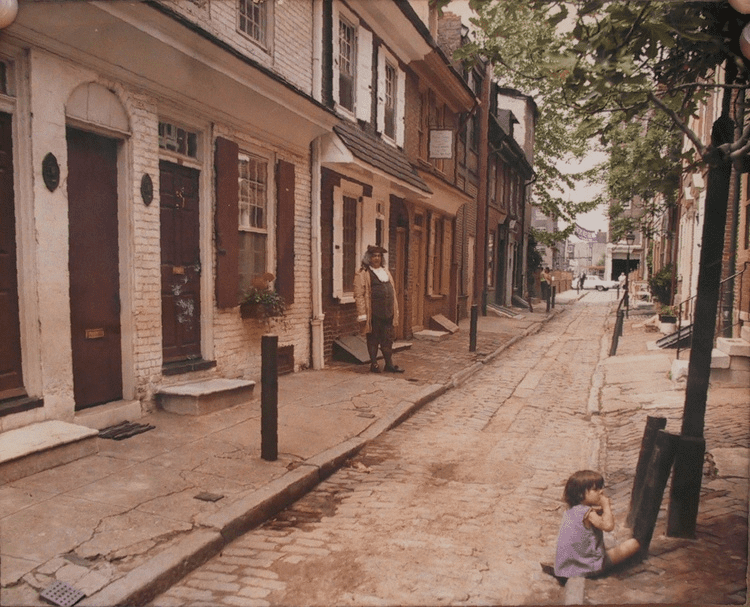
By the late 18th century, the houses on Elfreth’s Alley were constructed in the Federal and Georgian styles. They are concise and minimalist, small yet surprisingly spacious. Several unique buildings on this street are particularly worth noting for cultural tourists visiting Philadelphia. A distinct feature then, as now, was the cobblestone street itself.
In the early 19th century, the street’s population began to noticeably grow, and industry also saw changes. Centennial homes now housed families of German immigrants, which somewhat influenced the original appearance of the buildings. Additions were made, significantly expanding them and making them more capacious. Industrial facilities also started appearing on Elfreth’s Alley in the 19th century.
Next to residential homes, a factory manufacturing kitchen stoves emerged. Soon, several more similar industrial “spots” appeared near the historic street. Elfreth’s Alley was changing, but primarily in its industrial landscape. Its architecture, however, remained largely untouched.
Elfreth’s Alley in the Early 20th Century
The rapid pace of factory and industrial development in the area led to an influx of immigrants. By the early 20th century, the vicinity of Elfreth’s Alley was fully populated by Irish immigrants working in nearby factories. This significantly impacted the “landscape” of the historic site. In 1934, the Elfreth’s Alley Association (EAA) was founded.
Its mission was to preserve the city’s historical heritage and interpret it. Likely, the catalyst for its formation was the swift external changes and the increasing number of nearby factories. They ultimately succeeded in saving the alley from total destruction. From this period, the street effectively became known as Elfreth’s Alley. Before then, its neighboring section was simply called Cherry Street.
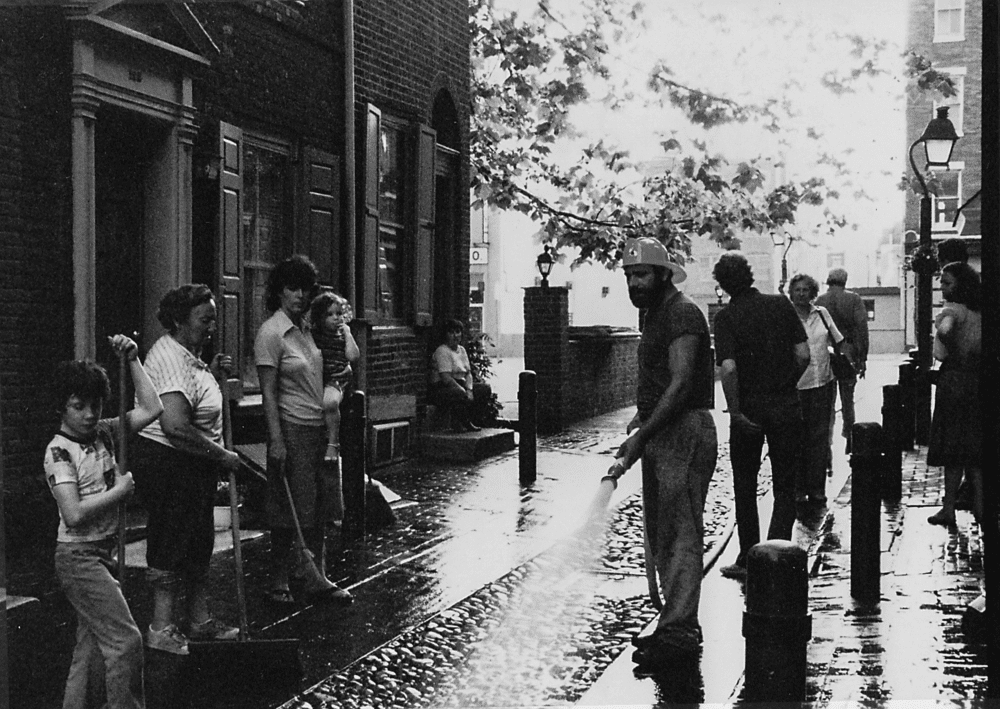
To this day, Elfreth’s Alley is not merely a historical legacy; it’s a vibrant residential neighborhood. People continue to live in these centuries-old houses. This, perhaps, is what truly makes this street unique.
Points of Interest
Among Philadelphia’s many streets, Elfreth’s Alley distinctly stands out. It sharply contrasts with modern surroundings, representing the colonial era in American history and the period of its independence.
Among tourists, Elfreth’s Alley in Philadelphia is arguably one of the most visited spots, not only for its rich history but also for its visual appeal. The place transports contemporary visitors back to the period of early America.
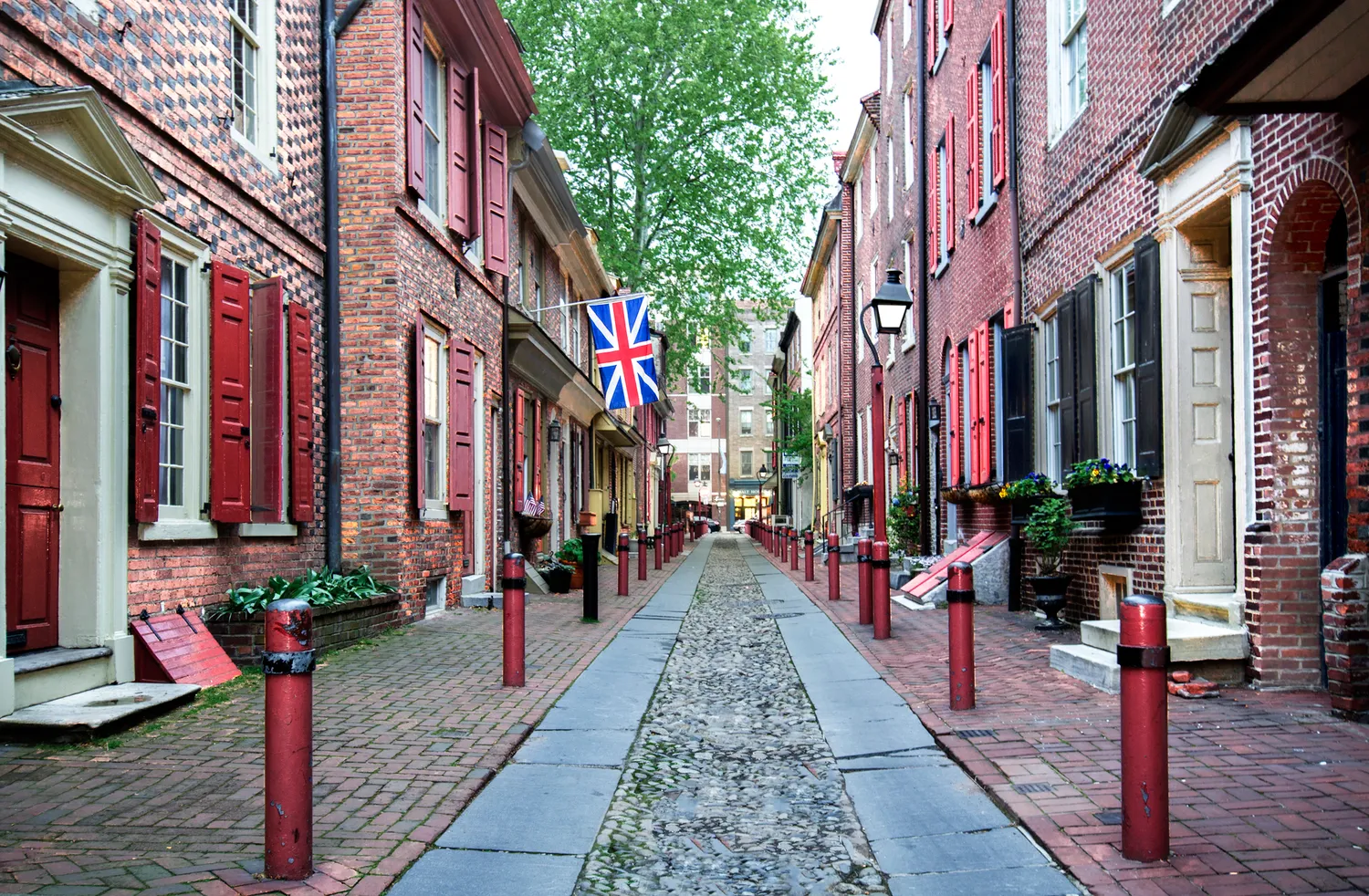
Tourists will find it fascinating to visit the Elfreth’s Alley Museum, located at 124-126. The 18th-century “Sewell House” offers a glimpse into the lives of the street’s residents during that era. You can learn many interesting facts about their rich history from both guides and local residents. Generally, all houses on Elfreth’s Alley are historically significant.
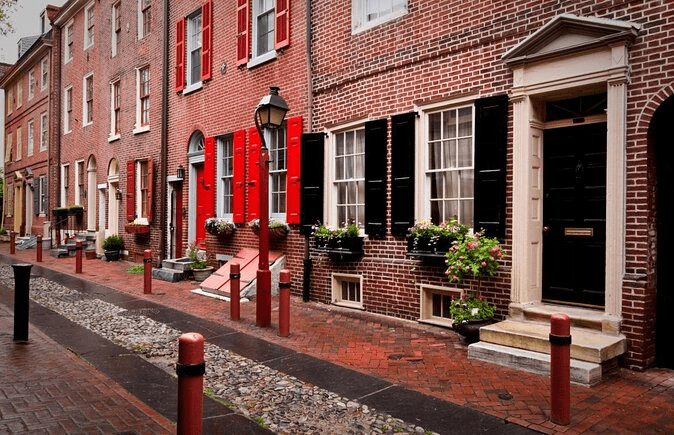
The museum is open on weekends, specifically Saturdays. First-time visitors have the option of hiring a guide who will narrate the history of Elfreth’s Alley and lead a tour through its historic buildings.
Elfreth’s Alley also features a souvenir shop, housed in what, by modern standards, is a very small space.
Celebrations on Elfreth’s Alley
Americans deeply cherish their history and historical past. The founding of Elfreth’s Alley in Philadelphia is a landmark event for them. Every summer, locals organize a celebration to mark the street’s creation. During this period, each house is open for visitors—a cherished tradition. But that’s not all!
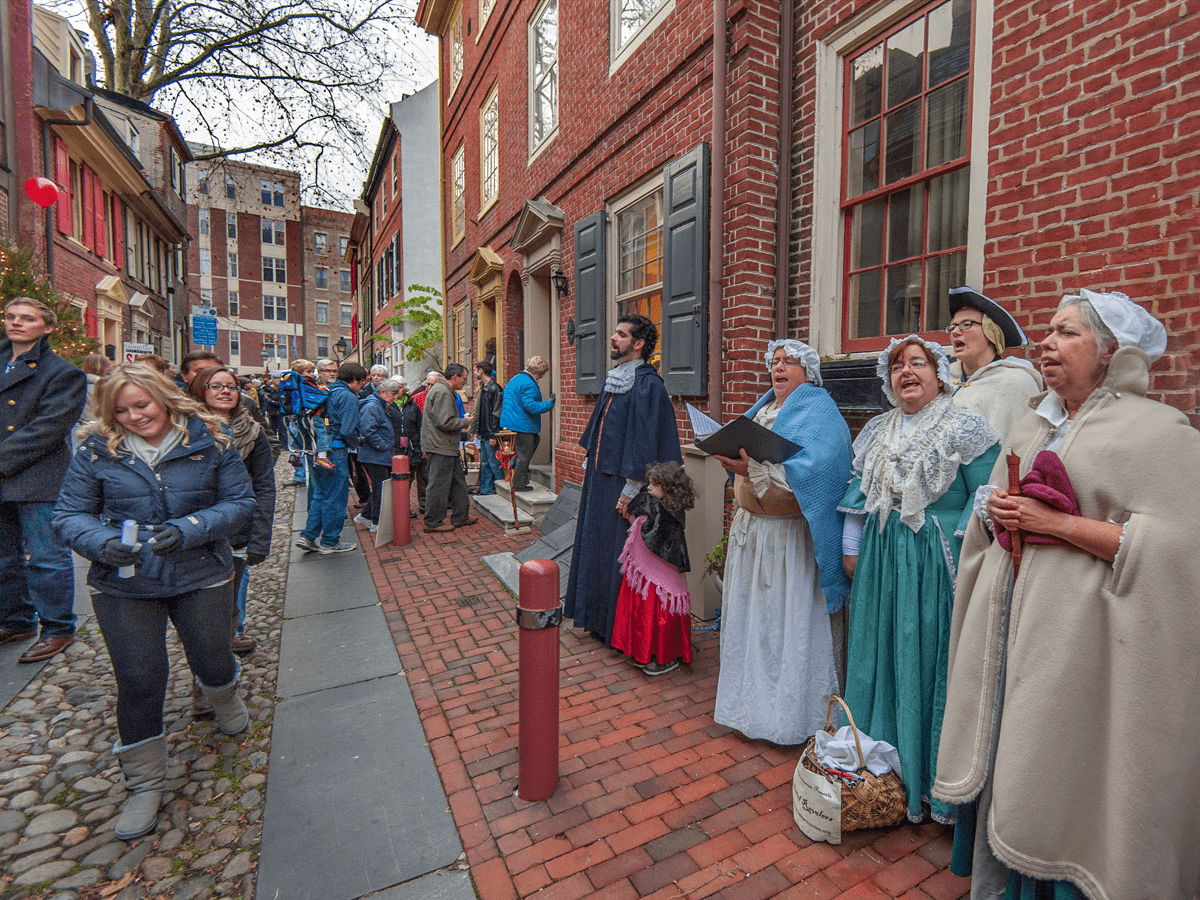
The residents themselves dress in colonial attire, showcasing their rich historical past. It’s a truly captivating spectacle in American culture, undoubtedly worth experiencing.
Perhaps you’re wondering if there are other “special” days when Elfreth’s Alley residents gladly open their homes to visitors? And we can tell you: “Yes!”
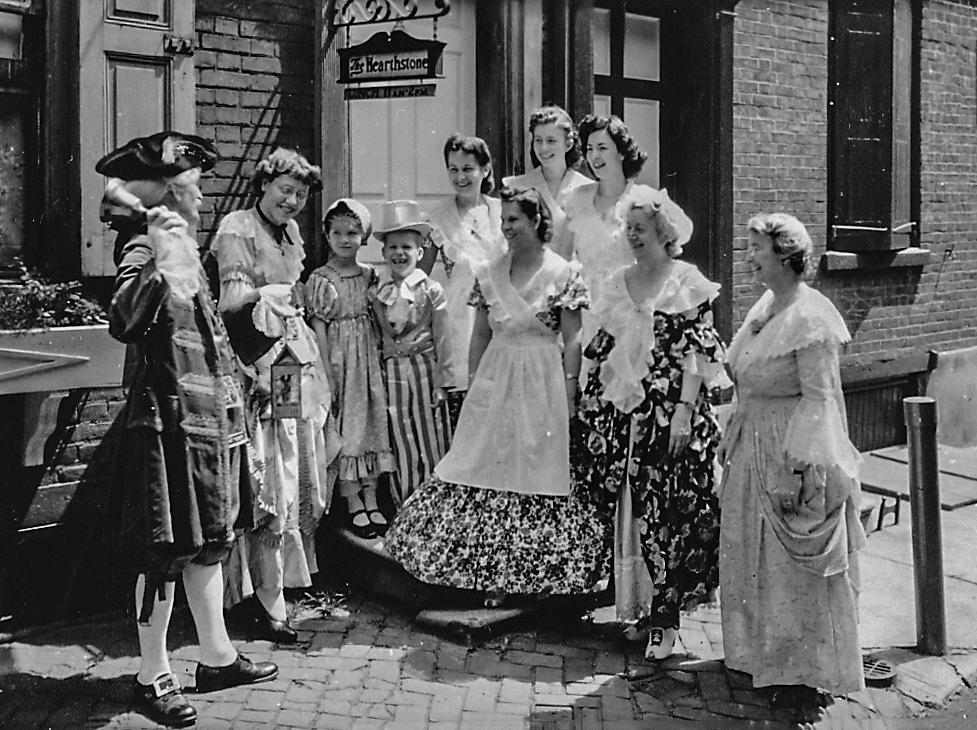
If you want to step inside the buildings and feel transported to 18th- or 19th-century America, visit Philadelphia on the first Sunday of December. A relatively new celebration, observed only since the 2000s on Elfreth’s Alley, is “Deck the Alley.”
On the first Saturday of December, all residents draw back the curtains and unveil the secrets of Elfreth’s Alley homes. You’ll have the opportunity to explore these historic buildings from the inside, admire their interiors and exteriors, and experience the true spirit of “early” America. This all comes with delightful treats and wonderful music.
The December celebration is unique because all private homes and the street itself are adorned with Christmas decorations. Carols fill the air, creating a truly special holiday atmosphere.
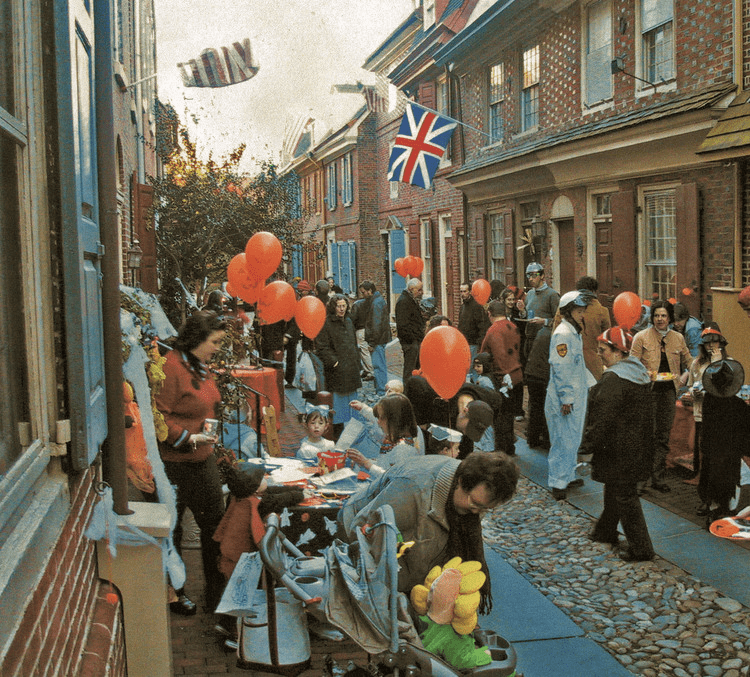
In early June, Elfreth’s Alley hosts its “Fete Day” celebrations. Residents honor the street’s historical legacy with a historical reenactment of the festival. It’s worth noting that “Fete Day” has been celebrated on Elfreth’s Alley for over 70 years. On this day, visitors to the street can tour residents’ homes, as their houses are once again open to tourists.
The festival features songs and music from the 18th century, performed by the local Brandywine Heights High School orchestra. They ceremonially march down the alley, playing ancient melodies. If you’re lucky enough to visit Philadelphia in early June, or if you live in the city but weren’t aware of “Fete Day,” we highly recommend joining the festivities.
Funds raised during these festive events are dedicated to maintaining the aesthetic appeal of the houses and their restoration.
So, unbeknownst to them at the time, two property owners joined forces and created a street that is now known as Elfreth’s Alley. It is and remains a national symbol not only of Philadelphia but of all America. Today, it stands as a vibrant landmark, showcasing examples of early American structures. Haven’t visited yet? We highly recommend you do so soon!