

Philadelphia boasts a number of magnificent and historically significant houses. One of these, the Powell House, is located at 244 South 3rd Street. It was constructed in 1765 in the Georgian style. The rumor has it that George Washington himself danced and had fun within its walls. In this article, we will tell you about the features of the interior and the history of the house. Find out more at philadelphia-future.
The Powell family and their residence
Merchant Charles Stedman was the first owner of the magnificent brick house in Philadelphia, which was built in 1765. However, he did not have the time to reside there. Charles soon found himself in a debtor’s prison due to financial difficulties, and Samuel Powell purchased his residence in 1769 for £3,150 sterling.
This man was a Quaker who converted to Anglicanism and supported the revolution in America. He was the last mayor of the city under British rule and became the first mayor of the independent United States. He was frequently referred to as the “Patriot Mayor”. At the same time, Powell was a rich man, an investor, merchant and real estate tycoon.
His wife, Elizabeth, was also an important figure. As an educated and intelligent woman, she organized fascinating parties for the political elite who assembled in Philadelphia to draft the Declaration of Independence and the Constitution. In addition, Elizabeth was able to become a confidant of George Washington, who also visited the now-famous Powell House.
Construction and repair work
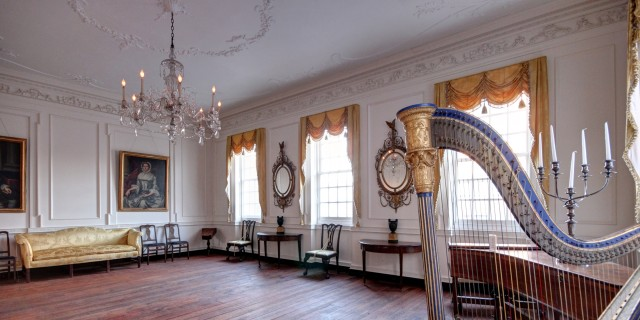
The project of the house was designed by the builder and architect Robert Smith. When Powell and his wife purchased it, they immediately began renovations and spared no expense in designing an exquisite interior. The house’s rooms were adorned with carvings by Philadelphia’s top craftsmen.
- James Clow created the carved ceiling of the Rococo dance hall.
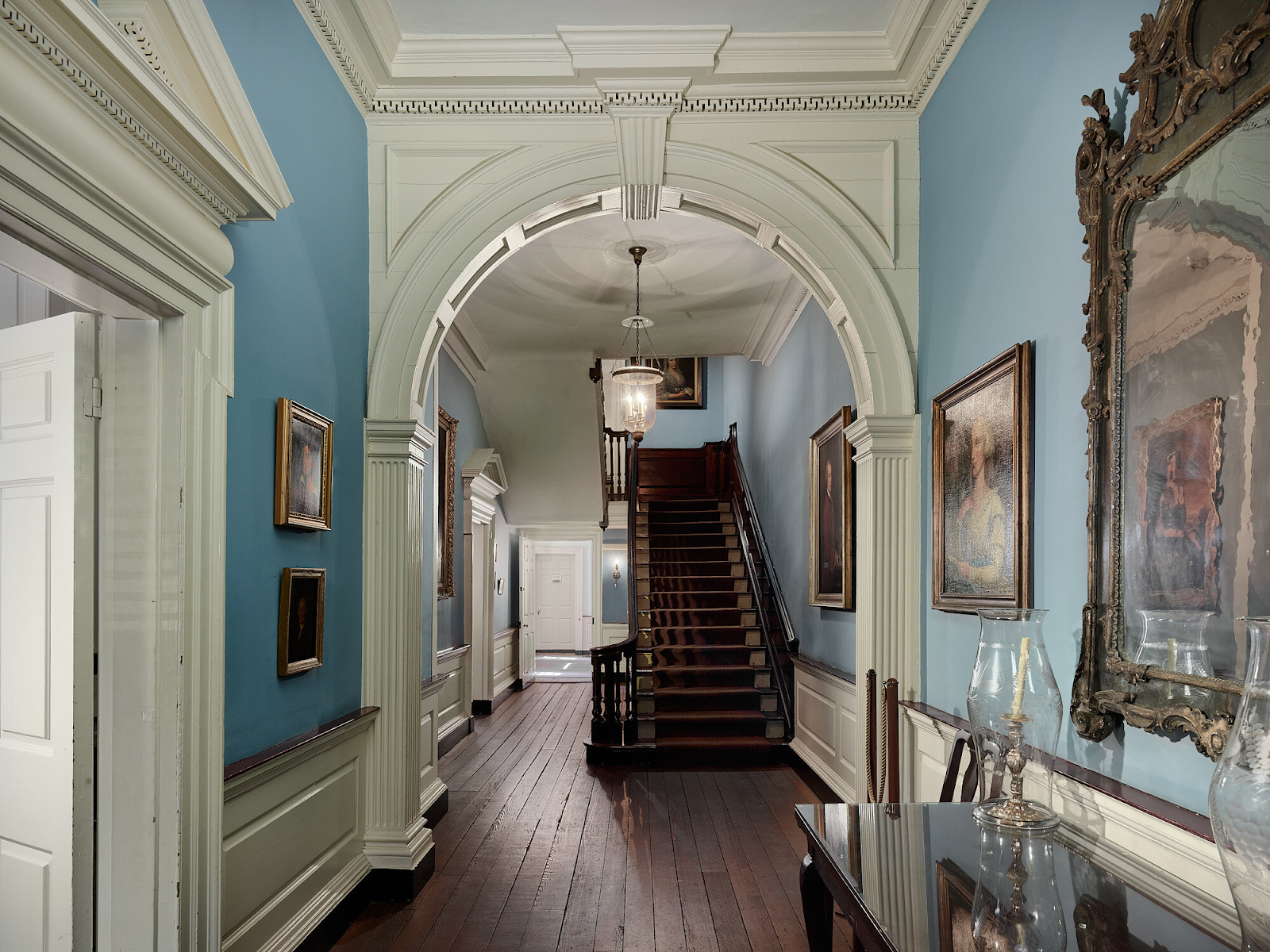
- Hercules Courtnay designed a decorative mantel, as well as baseboards, panels and cornices.
- Nicholas Bernard and Martin Jugiez crafted the mahogany staircase.
Next to this building was the house of Governor John Penn. It was seized during the War of Independence. Following the victory at Yorktown in 1781, George and Martha Washington spent several months residing there. Most likely, this is when the Powels began to invite them to their home. Their house was also visited by Benjamin Rush, John Adams, Benjamin Franklin and the Marquis de Lafayette.
It is worth noting that Philadelphia served as the national capital between 1790 and 1800. At the time, President Washington lived on Market Street. On his suggestion, a two-story semicircular addition to the presidential house’s southern wall was built. It expanded the presidential living room and dining room. The Powels were inspired by this effort and constructed a three-story half-tower in their home. This expansion can be seen in William Birch’s drawings from 1799, but it was removed 50 years later.
In 1793, Samuel Powell died of yellow fever. This outbreak took the lives of ten percent of the city’s population. His wife sold the house in 1798. The buyer was her niece’s husband, William Bingham.
Preserving the house
At the beginning of the 20th century, the Powell House housed an industrial warehouse. It was used by a company engaged in the import and export of Russian and Siberian horsehair and bristles. In 1918, the new owners removed and sold the exquisite wood paneling from the second-floor living room to the Metropolitan Museum of Art. It remains there as an exhibit of American decor. The plaster ceiling of the ballroom met the same fate in 1925 when it was purchased by the Philadelphia Museum of Art.
However, that was not the worst part. In 1930, they decided to demolish the house and build a parking lot in its place. Antiquarian Frances Wister saved the historic structure. The woman established the Philadelphia Society for the Preservation of Landmarks and began raising funds to purchase the building. In 1931, she achieved her goal.
Later, activists removed the expansion, which had been built in the 19th century and covered the eastern portion of the house. Architect H. Louis Duhring Jr. was hired to repair the house from the outside and inside, making it look like it did during the Powells’ time. The restored structure was presented to the public as a museum displaying the everyday life of wealthy Philadelphia citizens during the Revolution and the Revolutionary War.
The modern Powell House boasts a stunning entrance and an elegant dance hall with bas-relief plaster. It is once again adorned in mahogany and exudes grandeur. It is now considered one of the finest examples of a Georgian Colonial-style building. It also has a rich history, which includes a collection of decorative and applied arts, porters and a well-kept public garden.
In the twenty-first century, rumors spread about the ghost of Elizabeth Powell’s second cousin Peggy Shippen, who is said to live in the house and make an appearance occasionally. However, there is no evidence to support this, and this fact does not deter numerous visitors who wish to experience the history and beauty of the past.