

For 30 years, Philadelphia’s Liberty Bell Pavilion served as the iconic monument’s home. Constructed specifically for this purpose within Independence National Historical Park, the Bell resided there from January 1, 1976, until October 9, 2003. Just three years after the monument was relocated, the Pavilion itself was torn down.
Since then, the Liberty Bell has been displayed in a special center, built for it in 2003. The Pavilion, however, lives on only in the annals of history and in the memories of those who saw it. Learn more about the history of this structure at philadelphia-future.
The Liberty Bell’s Early History
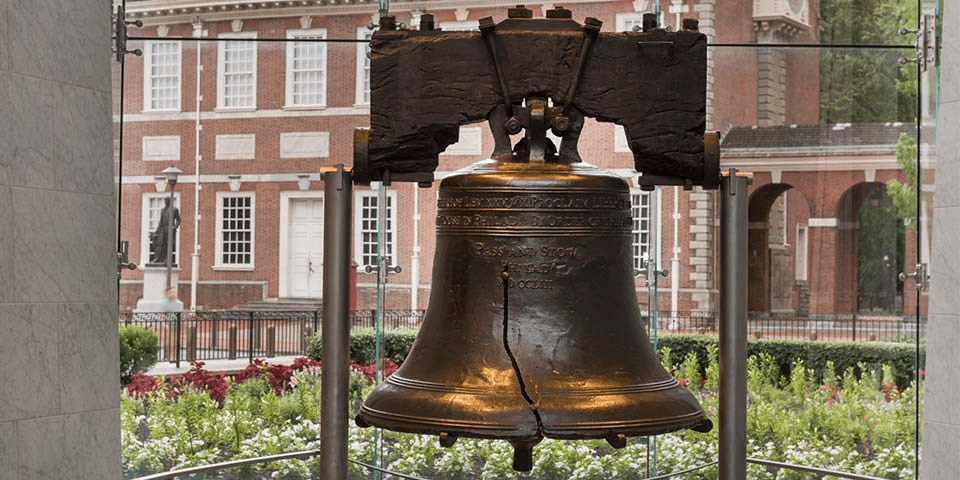
The Liberty Bell was cast in 1752 at the behest of the Pennsylvania Provincial Assembly. It bears the famous inscription, “Proclaim Liberty throughout all the land unto all the inhabitants thereof.” The Bell was intended for the Pennsylvania State House, now known as Independence Hall.
It was in this very historic building in 1776 that the Declaration of Independence was debated and signed, and in 1787, the U.S. Constitution was drafted here. The building’s rich history certainly justified the Liberty Bell’s placement within its walls.
Initially, this iconic artifact was secured on the lowest level in the wooden steeple of the building. It was later lowered into a brick tower because signs of rot were discovered on the wooden steeple. A century after its creation, the Bell cracked. It was then removed and left on the ground floor of Independence Hall, where visitors could still view it.
Relocating the Liberty Bell: Ideas and Plans
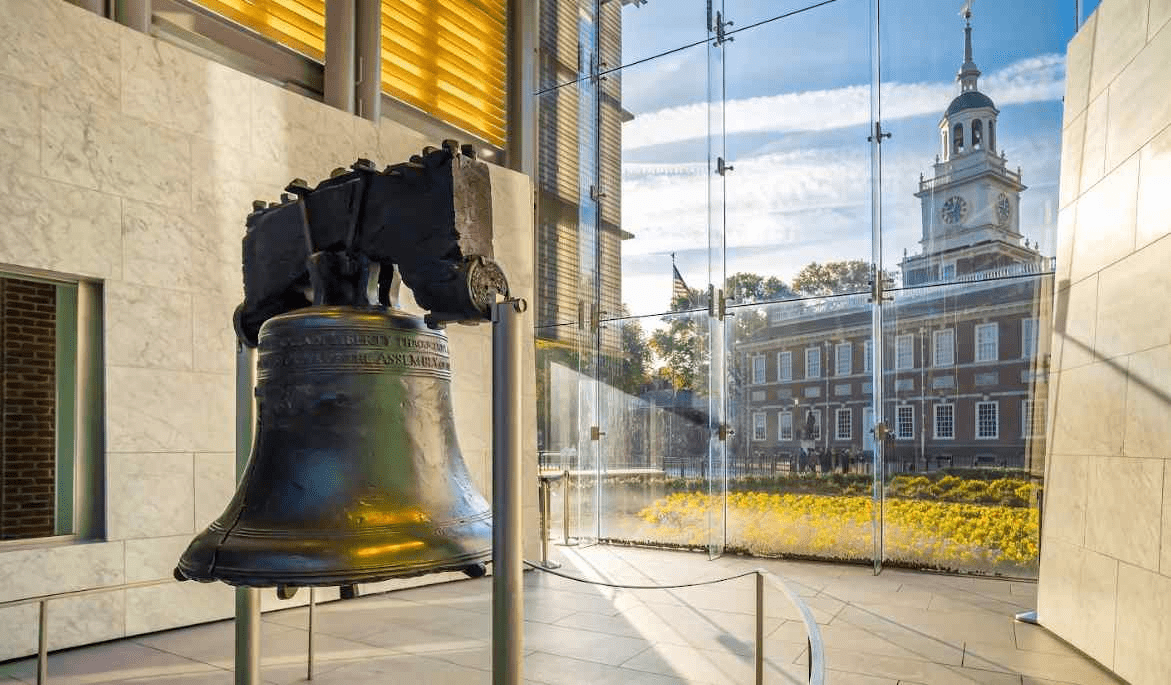
In 1969, Philadelphia began preparations for the U.S. Bicentennial celebration, scheduled for 1976. The city anticipated many guests who would be eager to explore its history and famous landmarks. One such landmark – the Liberty Bell – still remained on the first floor of Independence Hall.
The National Park Service then expressed concern that this location was too small for visitors. It was proposed to move the Bell and create a separate structure for it. According to a 1972 plan, a new structure was planned for its location at 3rd and Chestnut Streets, with the Bell to be installed on the second floor. However, members of Congress and the public criticized this plan due to the significant distance of the new location from the old, historically important one.
It was then proposed to build a separate pavilion in the “Independence Mall.” In this case, the monument would be about a quarter-mile from Independence Hall. This proposal also found no supporters.
Philadelphia’s then-mayor, Frank Rizzo, insisted on building the pavilion north of Independence Hall between Fifth, Sixth, Market, and Chestnut Streets. This project was accepted. Philadelphia modernist architect Romaldo Giurgola was chosen as the designer. He began working on the project in 1974. In early 1975, the foundation was laid, and within a year, the new building stood at the location chosen by the mayor.
The relocation of the Liberty Bell to its new home took place during the city’s New Year’s Eve celebration of 1975. The Pavilion opened to visitors at the first minute of January 1, 1976.
The Liberty Bell Pavilion: Creation and Demolition
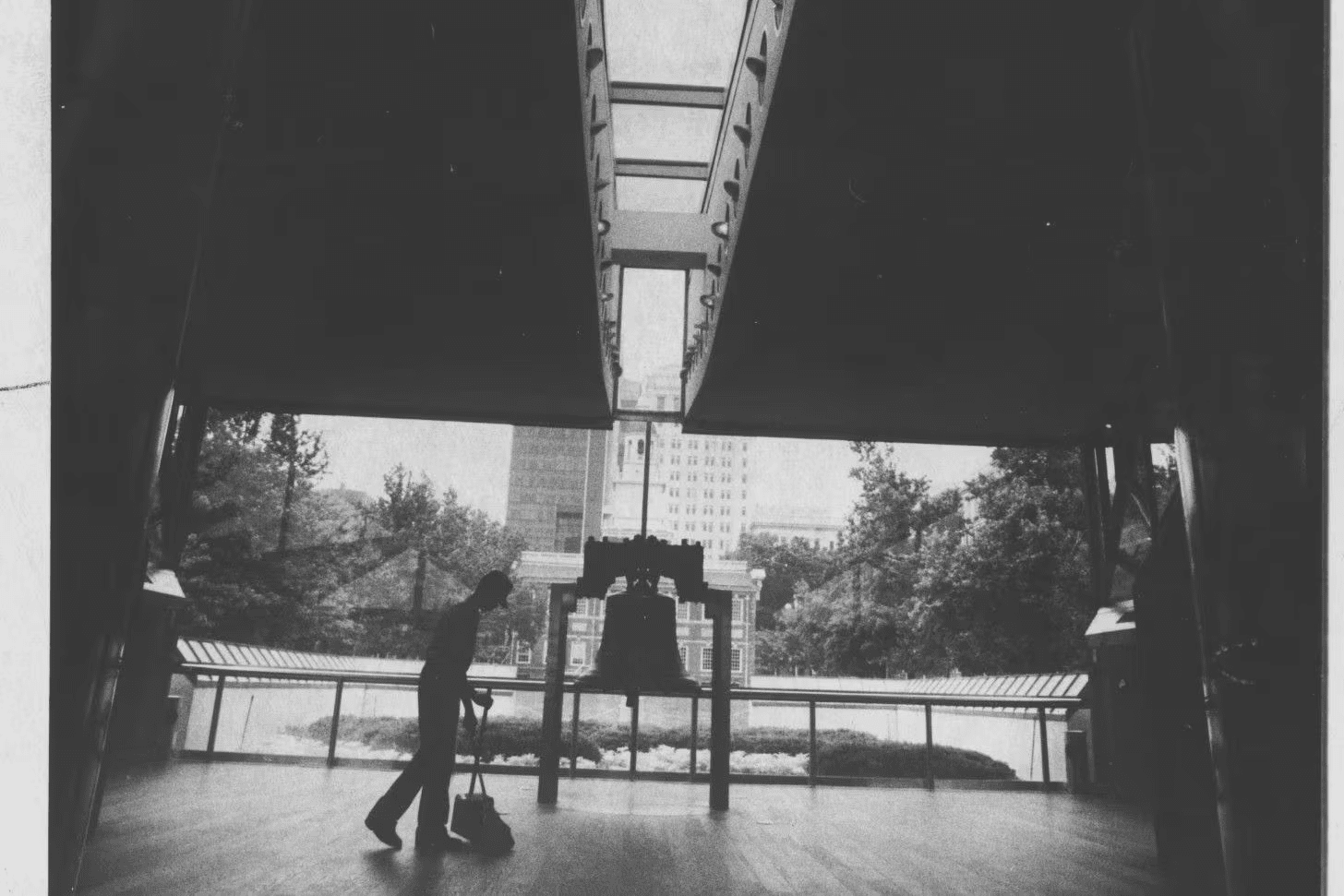
The architect designed the new building with glass and steel, giving it an hourglass shape. Visitors first entered a spacious lobby, from where a corridor led directly to the Liberty Bell. The monument was placed in a separate room against a glass wall with an image of Independence Hall. Here, guests were greeted with a short presentation on the Bell’s history.
Thanks to the skylights, the room was well-lit, and the visual pressure of the ceiling was reduced. The glass walls of the Pavilion’s northern and southern facades offered views of the Liberty Bell from many angles. At night, spotlights illuminated it. So, even during non-operating hours, anyone could admire the Bell.
The implemented project was approved by most architects. Some citizens called it cold and not worthy enough of this monument. To some, it resembled a subway station or a car showroom. Among the objective shortcomings worth noting was the Pavilion’s small size. It was designed for a maximum of 100 people. In addition, the presentation held visitors inside for some time. Even when these presentations were canceled, long queues often formed at the Pavilion, and waiting times lasted for hours.
In the 1990s, the National Park Service began the reconstruction of Independence Hall. Part of the new plan was the construction of a new facility for the Liberty Bell. It was built to the west of the existing one and ceremoniously opened on October 9, 2003.
The old pavilion was converted into a security building. Here, visitors who wanted to enter the Liberty Bell Center and Independence Hall were screened. Then, there was an idea to sell the building for $800,000, but no buyers were found. Eventually, it was partially dismantled to reuse building materials. The remnants of the former Liberty Bell Pavilion were completely demolished in 2006.